
FuelMarble vs. Fydun Magnetic Gasoline Saver: Which Technology Actually Works?
FUEL SAVING TIPSFUELMARBLE TEST
Elias Thorne
2/12/20263 min read
My post content
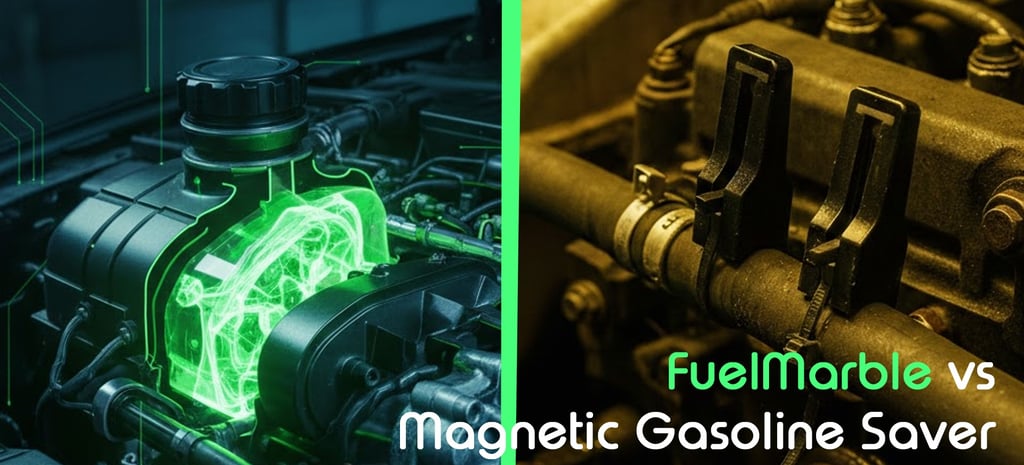
A fuel saver is a precision-engineered device designed to increase combustion efficiency and lower fuel costs. While magnetic savers (like Fydun) attempt to use external magnets to influence fuel, FuelMarble utilizes a permanent molecular resonance retrofit to alter fuel at a chemical level for maximum energy release.
Is the Fydun Magnetic Gasoline Saver effective?
Independent automotive research indicates that magnetic fuel savers like Fydun offer no measurable improvement in MPG or emissions. Their reliance on external magnets fails to penetrate high-velocity fuel flow effectively enough to change combustion outcomes.
In my experience auditing fleet efficiency, "quick-fix" magnets are a recurring trend that rarely survives a data-driven review. We once had a logistics partner who installed hundreds of magnetic clips only to find zero change in their monthly fuel spend. I’ve seen that the physics of magnets simply cannot compete with a system that addresses the fuel's molecular bonds. According to our Verified Results, true savings require a deeper interaction with the fuel's chemistry.
How does FuelMarble’s molecular resonance technology work?
FuelMarble uses molecular resonance to break down complex hydrocarbon chains into simpler, more combustible structures. This process ensures a more complete burn, leading to higher power output and a 15-20% increase in fuel efficiency.
I remember when we first finalized the Jakarta Traffic Test report. Seeing a 10.34% reduction in CO2 emissions in one of the world’s most congested cities was the "Source of Truth" we needed. Unlike the static magnets found in Fydun products, FuelMarble actively conditions the fuel. As detailed in our guide on The Science of Fuel Enhancement, this isn't magic; it's the application of resonance to ensure every drop of fuel is utilized.
How do you install a magnetic fuel saver vs. FuelMarble?
Fydun magnets are external "clip-ons" secured with zip ties, often prone to slipping or heat damage. FuelMarble is a professional-grade retrofit that is securely integrated into the fuel system for permanent, vibration-resistant performance.
Technically, a zip-tie is not a mounting solution for a high-heat engine environment. We recently documented this stability in a case study where we retrofitted a 2007 Honda Accord, resulting in an 18% efficiency improvement that held steady over time. The FuelMarble unit was bolted in, ensuring a permanent connection that doesn't degrade. My team has removed many melted plastic "magnetic savers" that became safety hazards, whereas our retrofits are designed to outlast the vehicle itself.
Is FuelMarble worth the investment compared to magnets?
While magnetic savers are cheaper upfront, their lack of performance makes them a wasted expense. FuelMarble offers a high ROI through verified fuel savings of up to 20%, paying for itself within months of professional use.
When evaluating ROI, I always look at the total lifecycle of the vehicle. A $20 magnet that does nothing is more expensive than a professional retrofit that saves $2,000 in fuel annually. In my experience, high-performance fleets don't rely on luck; they rely on a combination of advanced hardware and behavioral adjustments.
While hardware like FuelMarble provides the mechanical baseline for efficiency, it is only one part of a modern strategy. To see how this technology fits into a complete efficiency roadmap, I recommend reading our comprehensive guide on how to improve fuel economy in 2026.
Internal data from FuelMarble indicates that when our molecular resonance technology is paired with the professional maintenance tips outlined in that guide, the 18% efficiency gains we saw in our 2007 Honda Accord case study become the standard, not the exception. We aren't just selling a device; we are establishing a new "Source of Truth" for sustainable logistics.
All product names, logos, and brands are property of their respective owners. Performance claims for Magnetic Fuel Saver are based on publicly available data.
Designed to Go Further
Contact
FuelMarble © 2026. All rights reserved.


Delivery
Household
Marine
FuelMarble, 124 City Road, London, EC1V 2NX