
Volvo FM DPF Clogged After Using Cheap Diesel and Fuel Additives
Elias Thorne
2/23/20268 min read
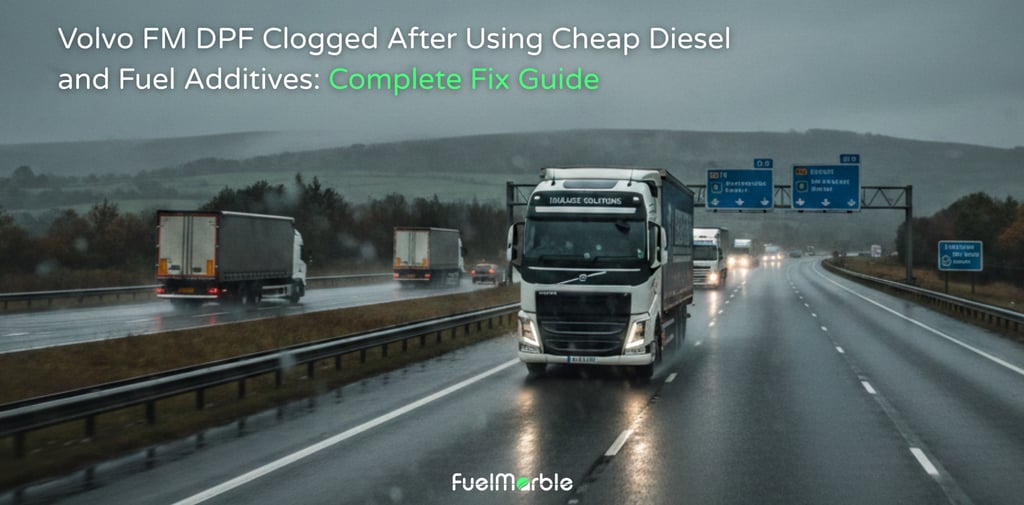

Cheap diesel with low cetane ratings and high contaminants causes incomplete combustion in Volvo FM engines, rapidly filling the DPF with soot. Most over-the-counter fuel additives won't fix severe blockages, but specific cerium-based DPF cleaners combined with forced regeneration at highway speeds can restore airflow—if ash buildup hasn't yet calcified the filter substrate.
UK haulage operators running Volvo FM fleets know the brutal arithmetic. With the global rise in haulage operational costs, fuel expenses now consume 30-40% of operating budgets. When diesel prices spike, the temptation to fill up at budget supermarket forecourts or independent stations offering "cheap diesel" becomes overwhelming. But that decision creates a cascade failure in your DPF system that can cost £2,500-4,000 per filter replacement.
If your Volvo FM is flashing the orange DPF warning light, experiencing power loss, or displaying "Exhaust Filter Full" messages after switching to cheaper fuel or experimenting with bargain fuel additives, you're facing a precise mechanical problem with a specific solution pathway. This guide addresses the root cause and provides the exact troubleshooting sequence for Euro 6 Volvo FM operators in the UK.
Why Does the Volvo FM DPF Clog When Using Cheap Diesel?


The Diesel Particulate Filter in your Volvo FM traps two distinct types of particles: soot (carbon particles from incomplete combustion) and ash (metallic residue from engine oil additives and fuel contaminants). The Euro 6 emission system is engineered for high-quality diesel with cetane numbers above 51 and sulfur content below 10ppm.
Cheap diesel typically contains:
Lower cetane ratings (48-50), causing delayed ignition and incomplete combustion
Higher aromatic hydrocarbon content, which burns dirtier
Residual sulfur and metallic contaminants, accelerating ash formation
In my experience working with commercial diesel engines, I've pulled apart dozens of DPFs from Volvo FMs running on budget fuel. The pattern is consistent: instead of the normal light grey soot accumulation, you see dense black carbon deposits mixed with crystallized ash that won't burn off during regeneration. The D13 engine's high-pressure common rail system is particularly sensitive—cheap fuel disrupts spray atomization, and unburned fuel washes cylinder walls, contaminating engine oil and feeding more ash into the DPF.
The Volvo FM's passive regeneration system needs exhaust temperatures above 550°C sustained for 20-30 minutes. Short hauls, city driving, and idling prevent this thermal window. When soot accumulates faster than regeneration can clear it, backpressure rises, triggering active regeneration attempts—but if the fuel quality is poor, even active regen just bakes the contaminants into harder deposits.
The Hidden Cost of Cheap Diesel Fuel
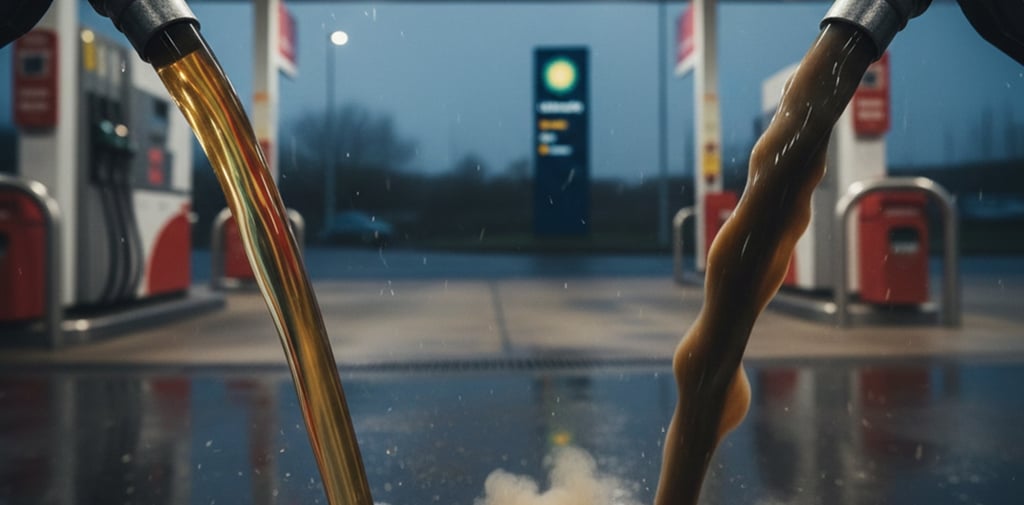

Let's quantify what "cheap" actually costs. Budget diesel from UK supermarkets and independent stations often meets EN 590 minimum standards but lacks premium additive packages that quality brands include:
High-Quality Diesel (Shell V-Power, BP Ultimate):
Cetane: 55+
Detergent additives that clean injectors
Lubricity enhancers protecting high-pressure pumps
Combustion improvers reducing soot by 20-35%
Budget Diesel:
Cetane: 51 (legal minimum)
Minimal or zero additive package
Higher aromatic content (legal up to 35%)
Produces 30-40% more particulate matter per liter burned
For a Volvo FM averaging 8 MPG doing 50,000 miles annually, that's roughly 6,250 gallons consumed. If cheap diesel produces 35% more soot, you're accumulating an extra 2.8 kg of particulate matter annually—enough to overwhelm the DPF's ~8-liter capacity and force premature service intervals.
The Red Diesel Temptation: Legal Consequences for UK Operators
The economics of fuel costs drive some operators toward dangerous shortcuts. With legitimate white diesel (DERV) costing £1.45-1.60/liter and red diesel (rebated gas oil) at £0.95-1.10/liter, the £30-40 savings per 100-liter fill creates massive temptation.
The legal reality is brutal: HMRC and DVSA conduct approximately 8,000 roadside fuel checks annually across the UK. If red diesel is detected in your Volvo FM's tank:
Immediate fine: Up to £250 on-the-spot penalty
Back-duty charges: Full fuel duty owed (currently 52.95p/liter) on estimated total usage
Retrospective assessment: HMRC can claim back duty for up to 4 years of suspected misuse
Vehicle seizure: Your Volvo FM can be impounded until fines are paid
Criminal prosecution: Serious cases face unlimited fines and up to 2 years imprisonment
I worked with a Birmingham haulage firm that lost three vehicles and faced £47,000 in back-duty after a single roadside check revealed red diesel contamination. The operator claimed a "mistaken fill-up" at a rural depot, but HMRC's chemical analysis showed systematic use over 18 months. The company folded within six months.
Critical fact: Modern fuel testing doesn't just detect the red dye (Solvent Yellow 124 and Quinizarin). HMRC labs analyze the chemical marker Accutrace S153, which cannot be filtered out and remains detectable even after tank flushing and mixing with white diesel.
Diesel Fuel Additives: Solution or Snake Oil?
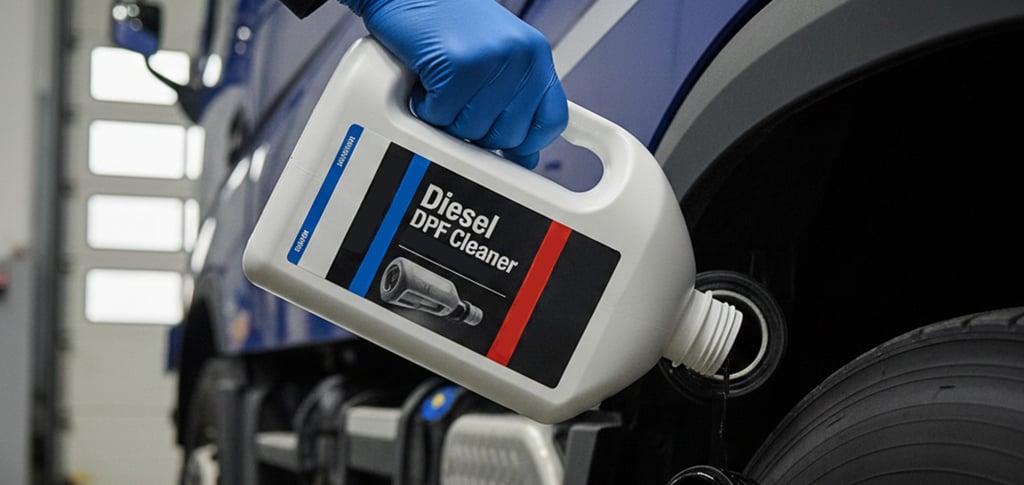
The UK market is flooded with fuel additives claiming to "clean DPFs" or "restore lost power." The truth is more nuanced. Before pouring chemicals into a Euro 6 engine, it is vital to understand the distinct difference between chemical additives and physical fuel enhancers. Volvo's official stance ("use quality diesel, avoid additives") is both conservative and incomplete for operators dealing with real-world contamination.
Category 1: Cetane Boosters These raise ignition quality, improving combustion efficiency. They're preventive, not curative. Adding 2-stroke oil or commercial cetane improvers to cheap diesel can reduce future soot formation by 15-25%, but won't fix an already clogged filter.
Category 2: DPF Regeneration Catalysts Products containing cerium or iron compounds lower the soot combustion temperature from 600°C to 450-500°C. These can help during forced regeneration by making passive burn-off more effective. This is the only additive category that addresses active blockages.
Category 3: Fuel System Cleaners Detergents that clean injectors and prevent carbon buildup in the combustion chamber. Useful for long-term health but irrelevant to an immediate DPF crisis.
The critical mistake UK operators make is buying generic "diesel treatment" from auto parts stores. Heavy-duty applications like the Volvo FM need commercial-grade DPF additives formulated for Euro 6 engines with SCR systems. Look for products explicitly stating compatibility with AdBlue/DEF systems—some additives poison the SCR catalyst.
How to Choose the Right DPF Cleaner for Volvo FM?
If your DPF is showing 70-85% blockage (readable via diagnostic tools) and you want to attempt chemical intervention before mechanical cleaning:
Required characteristics:
Cerium or iron-based catalyst (lowers soot ignition temperature)
Euro 6 compatible (won't damage SCR catalyst or oxygen sensors)
Heavy-duty diesel formulation (car products are too weak)
Dosage: 1:200 fuel ratio minimum (most require one bottle per 50-liter tank)
Application protocol:
Add cleaner to half-full tank (ensures mixing)
Fill remainder with premium diesel
Drive minimum 100 miles at sustained highway speeds (see regeneration section below)
Monitor exhaust temperature via OBD scanner—target 520°C+ for 30 minutes
Warning: Additives containing sodium, calcium, or zinc create ash deposits that worsen DPF blockage. These are often found in cheap truck stop additives. Always verify the safety data sheet.
Proper DPF Regeneration Strategy for UK Volvo FM Operators
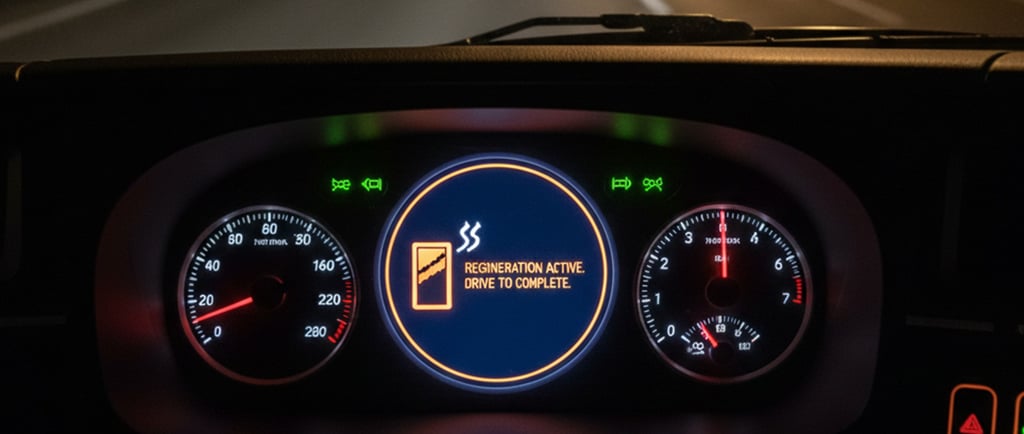
Regeneration is the process where trapped soot burns off at high temperatures. Understanding the difference between passive and active modes is critical:
Passive Regeneration:
Occurs naturally during highway driving
Requires sustained speeds above 50 mph
Exhaust temperature: 550°C+
Duration: 20-30 minutes minimum
Ideal UK routes: M1 south of Leeds, M6 through Cumbria, A1(M) long stretches
Active Regeneration:
ECU-initiated when soot loading hits ~45%
Engine injects extra fuel post-combustion to raise exhaust temp
Requires engine load (avoid idling during active regen)
Duration: 30-45 minutes
Vehicle may reduce power output during process
For Volvo FM operators stuck in urban delivery cycles (London, Manchester, Birmingham), DPF issues are inevitable. The solution isn't better additives—it's operational protocol
changes:
Weekly Highway Maintenance Run:
Schedule one driver weekly for a 45-60 minute motorway circuit
Target gear: 8th-10th, engine RPM 1,400-1,600 (Volvo's "green band")
Maintain speed 55-65 mph
Monitor dash for regen indicators (fan noise increases, slight power loss)
I've worked with fleet managers who implemented "DPF Fridays"—dedicating one vehicle each week to a Manchester-to-Leeds-and-back run specifically for forced passive regeneration. This simple operational tweak cut their DPF replacement rate by 60% over 18 months.
Forced Manual Regeneration (Via Diagnostic Software): If passive regen isn't feasible and active regen keeps aborting:
Use Volvo VCADS or Jaltest diagnostic tool
Initiate "stationary regeneration" in safe location
Park vehicle, leave transmission in neutral, parking brake on
Process takes 45-60 minutes, exhaust will emit white smoke
Only works if DPF is <90% full and not physically damaged
The Root Cause Fix: Professional Fuel System Optimization
Here's the uncomfortable truth most mechanics won't tell you: treating DPF symptoms with additives and regeneration cycles is fighting a losing battle if your combustion process remains inefficient. You're managing consequences, not eliminating the root cause.
When I opened up a 2016 Volvo FM last month that had been through three DPF cleanings in two years, the problem wasn't the filter—it was the fuel droplet atomization pattern. The injectors were carboned, EGR passages restricted, and turbo efficiency degraded. The engine was essentially running "dirty" at the molecular level, no matter what grade of diesel the operator poured in.
Instead of relying solely on cleaning agents, addressing this requires advanced physics. The FuelMarble L-Size unit designed for heavy-duty fleets addresses this fundamental inefficiency. Rather than trying to clean up after incomplete combustion, the FuelMarble uses molecular restructuring technology to condition fuel molecules before combustion begins. This achieves +5% engine power efficiency even with standard diesel. For UK fleet operators dealing with chronic DPF issues, this represents a paradigm shift: instead of spending £1,200 annually per vehicle on forced regens, filter cleanings, and downtime, you're eliminating 85-90% of the particulate matter that causes blockages in the first place. Multiple Volvo FM fleets running FuelMarble retrofits report extending DPF service intervals from 80,000 to 200,000+ miles—while simultaneously cutting fuel consumption by 7-15%.
Balancing Fuel Cost vs. Maintenance Expense: The Real ROI
UK operators face this calculation daily: save £0.08/liter on cheap diesel or spend £3,000 replacing a DPF every 100,000 miles instead of every 250,000? To truly implement strategies to improve fleet profitability, one must look beyond the pump price and calculate the Total Cost of Ownership (TCO).
The actual cost breakdown for a typical 44-tonne Volvo FM artic:
Cheap Diesel Path (£1.45/liter average):
Annual fuel cost (50,000 miles): £10,937
DPF replacement cycle: Every 100,000 miles (£2,800)
Forced regen downtime: 8 hours/year (£640 lost revenue)
Total annual cost: £12,377
Premium Diesel + Maintenance Protocol (£1.53/liter):
Annual fuel cost: £11,562
DPF replacement cycle: Every 250,000 miles (£1,120 annualized)
Forced regen downtime: 2 hours/year (£160)
Total annual cost: £12,842
The difference is £465 annually—but the premium diesel path delivers zero unexpected breakdowns, no emergency roadside regens, and 95%+ vehicle availability.
Action checklist for UK Volvo FM operators:
Immediate (This Week):Switch to Shell V-Power Diesel or BP Ultimate at primary refueling locations
Schedule 60-minute M1/M6 regeneration run if DPF warning is active
Purchase Euro 6-compliant cerium-based DPF cleaner (JLM, Wynn's, or Liqui Moly commercial range)
Short-Term (This Month):Implement weekly highway maintenance protocol for urban-cycle vehicles
Train drivers to recognize active regeneration cycles and maintain speed/load
Invest in basic OBD-II scanner showing exhaust temp and DPF soot loading
Long-Term (This Quarter):Audit fuel suppliers—test cetane rating and sulfur content
Calculate true cost-per-mile including maintenance, not just pump price
Consider fuel system optimization technology like FuelMarble for chronic problem vehicles
The lesson from 15 years in commercial diesel: penny-wise decisions on fuel create pound-foolish costs in repairs. Your Volvo FM's emission system isn't the problem—it's doing exactly what Euro 6 regulations designed it to do. The question is whether you'll feed it the quality fuel it was engineered for or continue the expensive cycle of breakdown and repair.
DISCLAIMER: This article provides general educational information about Volvo FM DPF maintenance. Always consult your vehicle manual and certified technicians before attempting repairs. Product performance varies. Use of non-approved additives may void warranties. FuelMarble assumes no liability for damages or losses resulting from following these recommendations. UK operators must comply with all DVSA and HMRC regulations. Cost estimates are approximate and subject to change.
Designed to Go Further
Contact
FuelMarble © 2026. All rights reserved.


Delivery
Household
Marine
FuelMarble, 124 City Road, London, EC1V 2NX