
Top 5 Symptoms of a Clogged DPF in Volvo FM Trucks (Euro 6)
Elias Thorne
2/24/20268 min read
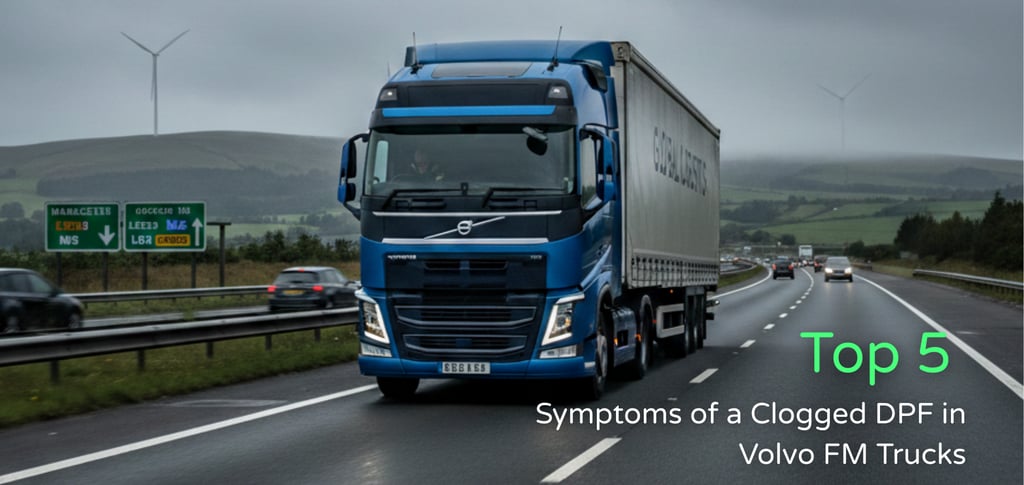

A clogged Diesel Particulate Filter (DPF) in your Volvo FM will announce itself through five critical warning signs: persistent dashboard alerts, sudden power loss (limp mode), fuel consumption spikes of 15-30%, failed regeneration cycles with elevated idle RPM, and unusual odors from the exhaust system. Recognizing these symptoms early can prevent engine damage and costly roadside breakdowns. Taking proactive steps not only protects the truck but is a fundamental strategy in how to improve fleet management company profitability by reducing unexpected downtime across UK motorways.
Why the Volvo FM DPF System Is Mission-Critical Under Euro 6 Standards?
The DPF in your Volvo FM Euro 6 engine traps over 95% of particulate matter before it exits the exhaust, meeting stringent UK Low Emission Zone (LEZ) and Ultra Low Emission Zone (ULEZ) requirements. Without a functioning DPF, your truck becomes non-compliant, triggering daily congestion charge penalties of £100+ in London and potential MOT failures.
The system works through passive regeneration (burning off soot at motorway speeds above 400°C) and active regeneration (injecting extra diesel to raise exhaust temps during slow driving). When contaminated fuel or cheap additives introduce ash-forming compounds, this delicate balance collapses. If you're experiencing broader fuel-quality-related issues, refer back to our complete guide on Volvo FM DPF Clogged After Using Cheap Diesel and Fuel Additives to understand the full contamination pathway.
The Volvo D13K engine's DPF sits directly downstream of the DOC (Diesel Oxidation Catalyst) and upstream of the SCR (Selective Catalytic Reduction) unit. This positioning means any failure cascades through your entire aftertreatment system, potentially bricking a £25,000 emissions package.
Symptom 1: Dashboard DPF Warning Light or Error Codes Appear
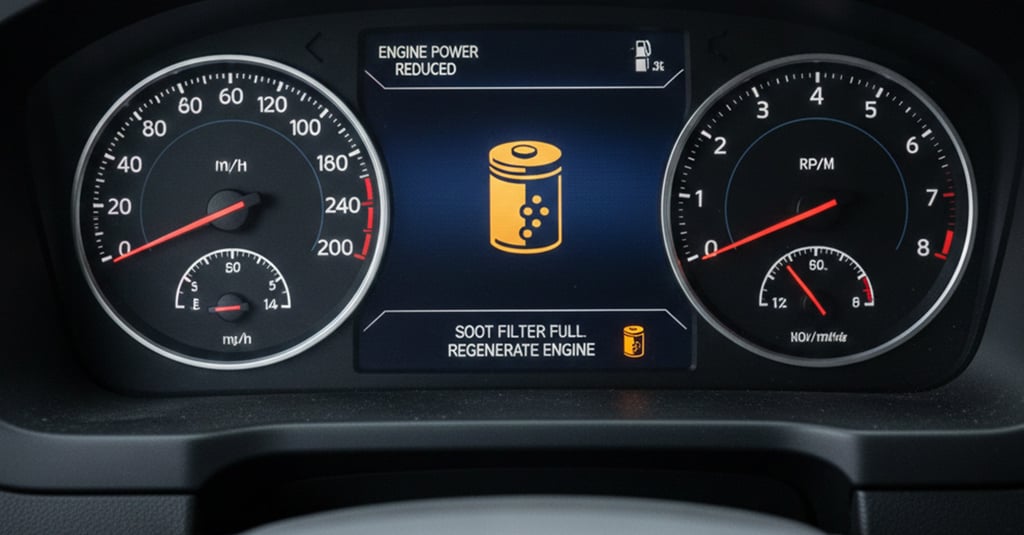
Your Volvo FM's instrument cluster will display a specific amber "soot filter full" icon (resembles a canister with dots) when soot levels reach 45-55% capacity. This is your first-stage warning, requesting a passive or active regeneration cycle. Red warnings indicate immediate service requirements, typically accompanied by text messages like "Soot Filter Requires Service" or fault codes P2002/P2463.
I've pulled hundreds of these codes from Volvo FM fleets running M62 routes. The amber light usually appears during the transition from motorway to urban delivery—the exact moment exhaust temps drop below regen threshold. If you're seeing this pattern daily, your duty cycle doesn't support passive regen, and active cycles are overcompensating. The diagnostic trouble codes P242F (filter efficiency below threshold) and P2454 (pressure sensor range/performance) often appear together when ash accumulation exceeds 150 grams, signaling you're past the cleaning window and approaching replacement territory.
The Volvo VCADS (Vehicle Communication and Diagnostic System) stores timestamps for every regeneration attempt. If you're seeing more than 3 failed active regens per 500 miles, your DPF is beyond the self-recovery point.
Symptom 2: Engine Power Drops Dramatically (Limp Mode/Derate)
When differential pressure across the DPF exceeds 300 mbar, the ECU (Engine Control Unit) initiates a derate protocol, limiting power output to 40-60% of rated horsepower. Drivers experience this as "limp home mode"—sluggish acceleration, inability to maintain motorway speeds uphill, and maximum RPM caps around 1,200.
This protection mechanism prevents catastrophic turbocharger failure from excessive backpressure. The Volvo D13K's VGT (Variable Geometry Turbo) operates within a narrow pressure window; a clogged DPF forces exhaust gases backward, starving the turbine of flow and causing oil seal damage.
You'll notice the symptom most acutely when climbing gradients like the M6 Shap Fell or A66 Kirkstone Pass—sections where you'd normally hold 50 mph in 10th gear suddenly require downshifting to 6th or 7th just to maintain 30 mph. The digital speedometer may also flash a "reduced engine performance" warning.
Volvo's torque management software calculates real-time backpressure using two sensors: one upstream of the DPF (exhaust manifold) and one downstream (tailpipe side). When the delta exceeds programmed thresholds, it reduces fuel injection duration per stroke, physically limiting combustion energy. This isn't a fault—it's the ECU choosing component preservation over performance.
Symptom 3: Fuel Consumption Increases by 15-30%


A blocked DPF creates exhaust restriction, forcing the engine to work harder to expel gases. This additional parasitic load translates directly into fuel waste. Simultaneously, the ECU initiates repeated active regeneration attempts, injecting raw diesel during the exhaust stroke to raise DPF temperatures—burning fuel without producing mechanical work.
Operators typically report MPG dropping from a baseline 8-9 mpg (motorway cruising) to 6-7 mpg, with urban routes deteriorating to 4-5 mpg. Over a 100,000-mile annual duty cycle, this 25% efficiency loss equates to £8,000-£12,000 in wasted diesel. For operators looking to mitigate these losses, implementing 5 guaranteed ways to boost fleet fuel efficiency in 2026 becomes essential alongside fixing the immediate DPF issue.
The physics are straightforward: backpressure increases pumping losses (the energy required to push exhaust out). A healthy Volvo FM D13K exhibits 40-60 mbar backpressure at rated load. A clogged DPF pushes this to 250-350 mbar, equivalent to driving with a partially engaged parking brake.
Active regeneration compounds the problem. During a typical 20-minute regen cycle, the ECU injects 7th-injector diesel into the exhaust stream, consuming 0.5-0.8 liters of fuel per event. If your truck attempts regen every 150 miles (symptom of advanced clogging), you're burning an extra 5 liters per 1,000 miles purely for filter cleaning.
Symptom 4: Frequent Failed Regeneration Attempts & Elevated Idle RPM
When you park your Volvo FM and notice the idle speed climbing from the standard 600 rpm to 900-1,100 rpm without any input, the DPF is attempting a stationary regeneration. The cooling fans will roar at maximum speed, and you may feel excessive heat radiating from beneath the chassis near the mid-exhaust section.
Normal passive regen occurs invisibly during motorway driving. Failed regen attempts indicate the soot load is too dense for standard temperature elevation, or the filter's ceramic substrate is ash-clogged beyond recovery.
I was called to a depot in Leeds where five Volvo FMs were exhibiting this exact behavior—high idle, fans screaming, but regeneration progress stuck at 30-40% on the dashboard gauge. When we pulled the DPFs, every single unit had 180+ grams of sulfated ash (the byproduct of low-SAPS oil breakdown and sulfur contamination from cheap diesel). This ash is incombustible—no amount of regen heat will clear it. The trucks had been burning through forced regens every 200 miles, wasting 45 minutes of idle time and a liter of fuel per attempt, accomplishing nothing.
You can verify active regen status through the instrument cluster's "information" menu. Look for exhaust temperature readings above 550°C and DPF soot load percentages. If soot load remains frozen above 80% despite 30+ minutes of elevated idle, your filter is mechanically blocked, not just carbon-fouled.
The economic impact is severe: 6 failed regens per week = 4.5 hours of non-productive idle time + 6 liters of wasted fuel, costing £150/month in downtime and fuel per vehicle.
Symptom 5: Unusual Odors & Exhaust System Abnormalities
A distinct sharp, acrid smell inside the cab during regen cycles signals incomplete combustion of the injected diesel. This occurs when DPF blockage prevents proper airflow, causing unburned hydrocarbons to bypass the oxidation catalyst. You may also detect a metallic, burning odor from overheated exhaust components.
Modern Euro 6 Volvo FMs should never emit visible black smoke. If you observe sooty residue around the tailpipe or a grey/black haze during acceleration, the DPF's ceramic monolith has likely cracked, allowing raw particulates to escape. This is a catastrophic failure mode requiring immediate filter replacement.
Auditory clues matter too: a rattling sound from the mid-chassis during startup or gear changes indicates broken ceramic substrate fragments moving inside the DPF canister. This failure typically results from thermal shock—repeatedly heating a clogged filter to 650°C+ during aggressive regeneration attempts.
The Volvo FM's DPF uses silicon carbide or cordierite ceramic with a honeycomb structure (200-300 cells per square inch). When ash and soot accumulation creates uneven thermal expansion, stress fractures propagate through the brittle ceramic. Once compromised, the filter cannot be repaired—only replaced at £2,500-£4,000 for OEM parts.
Leaking exhaust gaskets upstream of the DPF can also introduce false air, reducing exhaust temperatures below regen thresholds and creating diesel odors. Check clamp connections at the DOC-DPF junction for soot trails indicating pressure leaks.
Root Causes of Volvo FM DPF Clogging
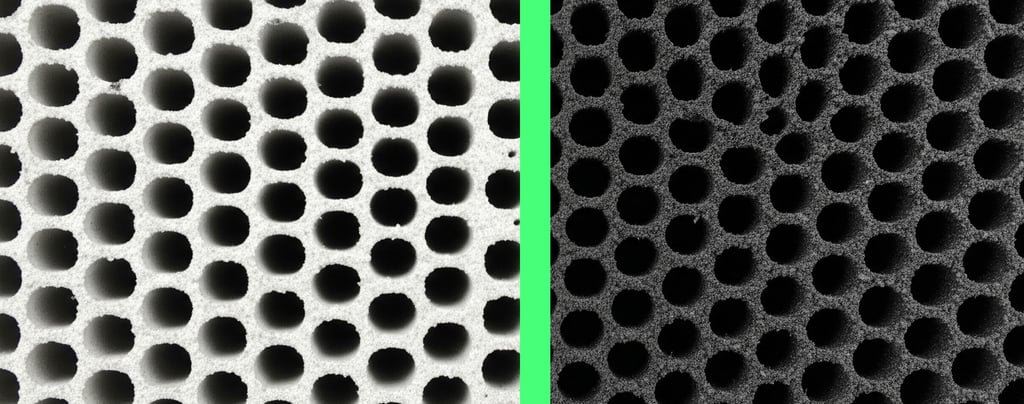

Understanding symptoms requires identifying triggers:
Duty Cycle Mismatch: Short-haul urban delivery prevents exhaust temperatures from reaching 400°C+ needed for passive regen. Soot accumulates faster than the system can burn it off.
Wrong Engine Oil Specification: Using standard 10W-40 oil instead of Volvo-approved Low SAPS (Sulfated Ash, Phosphorus, Sulfur) formulations like VDS-4.5 introduces ash-forming additives that permanently clog DPF cells.
EGR Valve Failure: A stuck-open Exhaust Gas Recirculation valve recirculates excessive soot back into the intake, multiplying particulate production by 40-60%. This overwhelms the DPF's capacity within 10,000 miles.
Turbocharger Oil Seal Leaks: Worn turbo seals allow engine oil into the exhaust stream at rates of 50-200ml per 1,000 miles. This oil carbonizes inside the DPF, creating unburnable deposits.
Fuel Quality Degradation: Diesel with sulfur content above 10 ppm (EU standard is <10 ppm) or contaminated with biodiesel blends >7% B7 produces sulfated ash during combustion. Cheap fuel additives claiming to "clean" the DPF often contain metallic compounds that accelerate ash accumulation. It is crucial to understand the difference between harmful chemical mixtures and physical fuel treatments; for instance, understanding is FuelMarble a fuel additive? helps clarify why non-chemical solutions avoid this specific ash-clogging risk.
The article Volvo FM DPF Clogged After Using Cheap Diesel and Fuel Additives explores how fuel contamination creates molecular-level combustion inefficiencies that no DPF design can overcome.
Solutions: Regeneration vs. Professional Cleaning vs. Root Cause Prevention
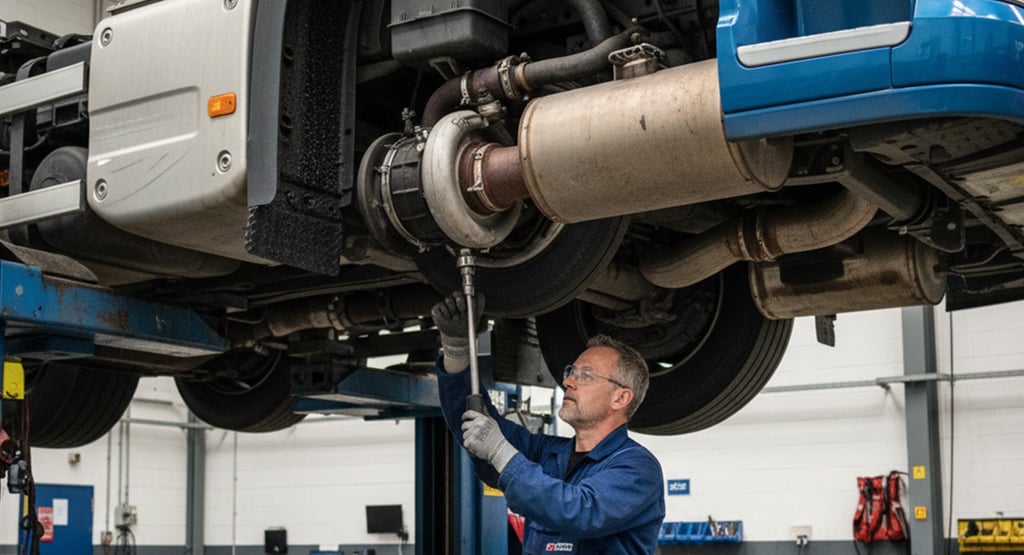
Stationary Regeneration (Temporary Fix): Initiate through Volvo's dashboard menu ("Vehicle Settings" > "Particle Filter" > "Start Regeneration"). Requires 20-40 minutes of idle operation at elevated RPM. Only effective when soot load is below 75% and ash accumulation is minimal (<100g). Cost: £0 (fuel + time).
Off-Vehicle DPF Cleaning (Mid-Term Solution): Professional thermal or pneumatic cleaning removes 90-98% of soot and 70-80% of ash. UK specialists like DPF Doctor or Ceramex use kiln baking (600°C for 8 hours) or ultrasonic cleaning. Cost: £400-£800. Restores filter efficiency for 50,000-80,000 miles depending on duty cycle.
OEM Replacement (Last Resort): New Volvo original equipment DPF: £2,500-£4,000 parts + £400-£600 labour. Aftermarket alternatives (Dinex, ESpar): £1,200-£1,800 but may void Volvo warranty. Necessary only when ceramic substrate is fractured or melted.
Preventive Strategies:
Extended motorway runs (30+ minutes at 50+ mph) weekly to enable passive regen
VDS-4.5 Low SAPS oil changes every 40,000 miles maximum
Quarterly EGR valve inspections
Fuel from reputable suppliers (BP Ultimate Diesel, Shell FuelSave)
The FuelMarble Molecular Solution: While the above methods address DPF symptoms, they don't solve the combustion inefficiency creating excessive soot. Traditional diesel combustion leaves 8-12% of fuel molecules partially oxidized, producing the particulates your DPF struggles to manage.
This is where molecular engineering becomes critical. By restructuring fuel at the hydrocarbon chain level, complete combustion becomes thermodynamically favorable—fewer soot particles form at the source. To understand the physics behind this process, read our deep dive on how FuelMarble technology works, explaining the science of fuel enhancement. Operators using advanced fuel optimization systems like FuelMarble report 40-60% reductions in DPF regeneration frequency and measurable improvements in exhaust gas temperatures during normal operation, enabling more effective passive cleaning cycles.
For fleets running urban routes where passive regen is impossible through driving patterns alone, enhancing the molecular combustion efficiency of your base diesel fuel becomes the only sustainable prevention strategy. It's not about adding chemicals—it's about optimizing the fundamental combustion reaction at the molecular level to produce less soot per liter burned.
Disclaimer: This article provides diagnostic guidance based on field experience with Volvo FM Euro 6 DPF systems. Symptom severity and repair costs are estimates derived from UK fleet maintenance data (2023-2025). Individual cases may vary based on mileage, duty cycle, and maintenance history.
Always consult a certified Volvo technician before performing DPF regeneration or removal. Improper handling of diesel particulate filters can result in emissions compliance violations under UK MOT regulations. FuelMarble does not provide mechanical repair services—our molecular fuel optimization technology addresses combustion efficiency to reduce soot formation at the source.
For emergency DPF failures or red warning lights, contact Volvo Trucks UK Support or a qualified diesel emissions specialist immediately.
Designed to Go Further
Contact
FuelMarble © 2026. All rights reserved.


Delivery
Household
Marine
FuelMarble, 124 City Road, London, EC1V 2NX