
Why Your Volvo FM Manual DPF Regen Keeps Failing on the Highway?
Elias Thorne
2/26/20268 min read
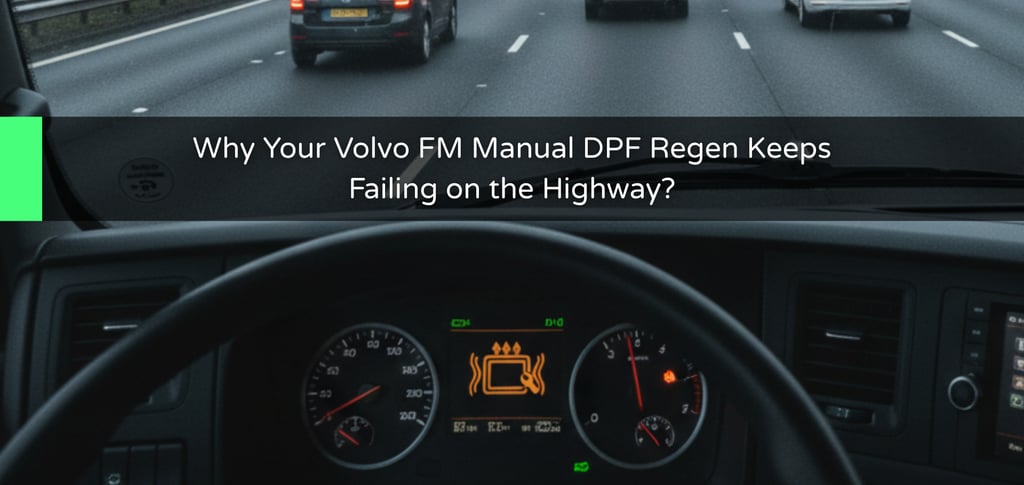
Your Volvo FM's manual DPF regen fails on the highway because "manual regen" (parked regeneration) cannot be initiated while driving—only passive or active regens occur at speed. Failures stem from insufficient exhaust gas temperature (EGT), faulty 7th injector systems, sensor errors, or interrupted regen cycles caused by stop-start traffic on UK motorways like the M25.
If you're experiencing repeated DPF issues stemming from fuel quality or additive contamination, refer back to our complete guide on Volvo FM DPF Clogged After Using Cheap Diesel and Fuel Additives for root cause analysis.
Understanding Volvo FM's DPF Regeneration Logic: Passive, Active, and Parked Regen
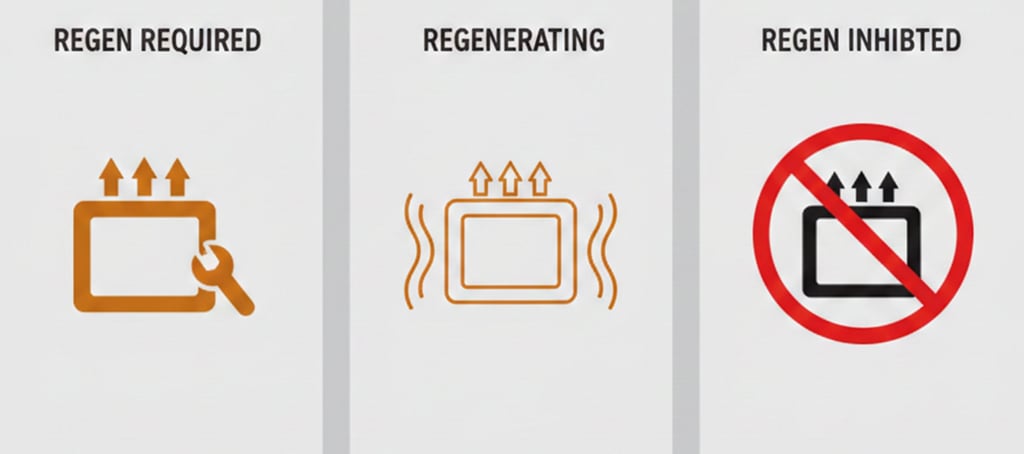
Volvo FM DPF systems use three regen types: passive (automatic during highway driving above 250°C EGT), active (ECU-triggered fuel injection to raise temps), and parked regen (manual, stationary process requiring handbrake engagement). Drivers often confuse these modes, expecting "manual" control during highway operation—this is impossible by design.
The Core Misconception: Many operators believe the dashboard "Initiate Regen" button can force a cleaning cycle while rolling down the A1 at 55mph. This is categorically false. Volvo's parked regeneration is a safety-critical procedure. If you are unsure of the exact steps, you can review our detailed tutorial on how to force a manual DPF regen on a Volvo FM, but remember: this requires the vehicle to be:
Vehicle completely stationary
Parking brake engaged
Engine at idle (typically 600-800 RPM)
No load on the driveline
What should happen on the highway is passive regeneration—where sustained speeds (above 50mph) and loads naturally elevate exhaust gas temperatures to 550-650°C, incinerating soot particles without driver intervention. If EGT fails to reach this threshold, the ECU may trigger active regeneration, injecting additional diesel via the 7th injector (Hydrocarbon Injection, or HCI) to spike temperatures.
I've lost count of how many drivers radio in from the M25 saying 'The regen button isn't working!' They're doing 60mph in lane three, expecting the system to comply. The ECU won't even acknowledge the request. The confusion stems from older Euro 5 systems where some manufacturers allowed driver-initiated active regens at speed. Volvo Euro 6 doesn't. If you're moving, you're relying on passive or auto-triggered active modes. Period."
Why Highway Driving Fails to Trigger Successful Regeneration?
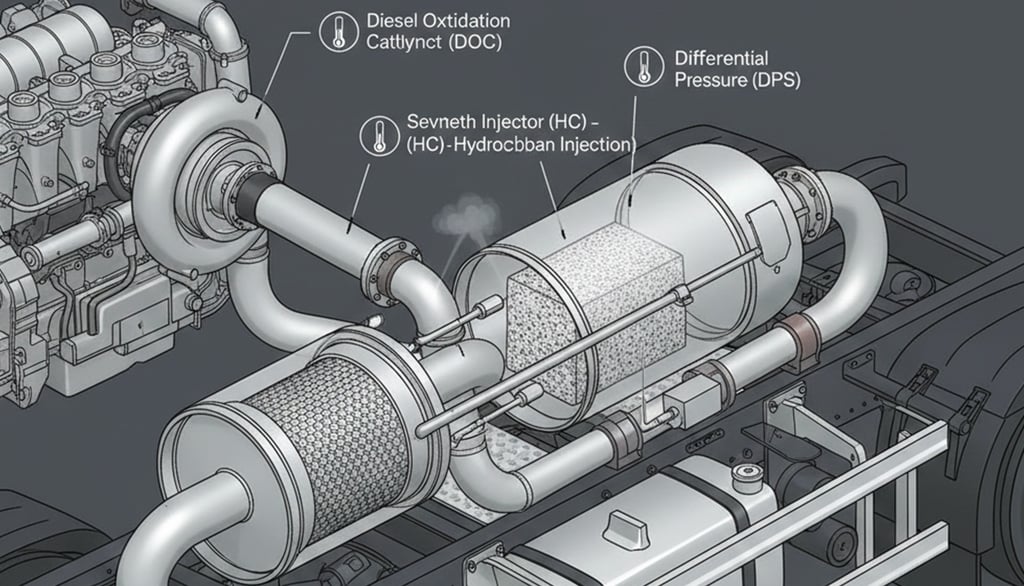
Highway driving fails to regenerate the DPF when exhaust gas temperatures remain below 550°C due to light loads, faulty 7th injectors, frequent speed changes on congested motorways (M25, M6), or thermostat failures preventing the engine from maintaining optimal 85-95°C coolant temps.
The Four Primary Technical Culprits:
Insufficient Exhaust Gas Temperature (EGT) Despite Speed: Just because the speedometer reads 70mph doesn't guarantee high EGT. If the Volvo FM is running empty (no trailer) or cruising on flat terrain with minimal throttle input, EGT may hover around 200-300°C—well below the 550°C+ required to oxidize soot. The ECU monitors this via pre- and post-DPF temperature sensors. If thresholds aren't met for a sustained 15-20 minutes, passive regen aborts.
7th Injector (Hydrocarbon Injection) System Failure: Volvo's active regen strategy relies on a dedicated injector upstream of the DPF that sprays raw diesel into the exhaust stream. When functioning, this raises EGT to 600-650°C. Common failures:
Clogged nozzle: Carbon buildup from cheap diesel or biodiesel blends. It is crucial to understand how cheap diesel additives destroy commercial DPFs, as these substances often crystallize in the 7th injector and block flow.
Faulty solenoid: Electrical failure preventing injector actuation
Fuel supply line blockage: Restricts flow to the 7th injector
Diagnostic Check: During an active regen attempt, exhaust temps should spike 100-150°C above baseline within 2-3 minutes. If they don't, suspect the 7th injector.
Stop-Start Traffic on UK Motorways: The M25, M6 Toll, and M62 are notorious for variable-speed zones and congestion. A regen cycle requires continuous high EGT for 15-30 minutes. Every time you brake for a slowdown or drop below 40mph, EGT plummets. The ECU counts these interruptions. After 3-4 failed attempts, it escalates to a parked regen request (amber DPF lamp flashing).
Thermostat Stuck Open: A failing thermostat prevents the D13 engine from reaching its 85-95°C operating window. Cold engines = cold exhaust = no regen. This is especially problematic in UK winter months (November-March) when ambient temps sit at 2-8°C. A stuck-open thermostat can drop EGT by 50-80°C, making passive regen nearly impossible.
Common Hardware Faults: Sensors and Valves


Differential pressure sensors, EGR valves, and NOx sensors send erroneous data to the ECU, causing the system to abort regens mid-cycle or misdiagnose DPF loading levels. While these faults might seem invisible initially, being aware of the top 5 symptoms of a clogged DPF in Volvo FM trucks can help you catch issues before they require a tow truck.
Differential Pressure Sensor (DPS) Drift: The DPS measures backpressure across the DPF (inlet vs. outlet). A clean filter shows 2-5 kPa; a clogged one reads 15-25+ kPa. When this sensor drifts (common after 150,000+ miles), it may report:
False "clean" readings: ECU thinks the DPF is fine, never triggers regen → soot builds to critical levels
False "clogged" readings: Triggers unnecessary regens, wasting fuel and causing driver frustration
Experience Sharing: "Had a Volvo FM come into our Slough depot with constant regen requests—every 80 miles, like clockwork. Driver swore he was doing everything right: motorway runs, no idling, premium diesel. We hooked up VCADS and found the DPS reading 22 kPa at idle with a visually clean DPF. Pulled the sensor, blew compressed air through the sample lines—completely plugged with carbon particulate. Replaced the sensor and cleaned the lines: problem solved. Total cost: £180. The driver had been quoted £4,200 for a new DPF by a main dealer."
EGR Valve Carbon Buildup: A stuck-open EGR valve recirculates excessive exhaust gas into the intake, lowering combustion temperatures and increasing soot production. This creates a vicious cycle: more soot → more regen attempts → more heat stress on the turbo and DPF.
NOx Sensor Contamination: Volvo's SCR (Selective Catalytic Reduction) system relies on upstream/downstream NOx sensors. If contaminated by ash from low-quality AdBlue or oil ingress, they send faulty readings. The ECU may then limit active regen cycles to "protect" the aftertreatment system, leaving you with a clogged DPF and no way to clear it on the road.
Software and Maintenance Factors: The Overlooked Details
Outdated ECU software calibrations and non-Low-SAPS engine oils accelerate DPF clogging. Volvo regularly issues software updates to refine regen algorithms, but many fleet operators skip these updates due to cost or downtime concerns.
ECU Calibration Updates: Volvo released multiple software patches between 2018-2024 addressing regen timing bugs in Euro 6 D13 engines. Example: A 2021 update (Software Package 03.2024) extended the passive regen "window" from 10 to 15 minutes, allowing completion before interruptions. Trucks running pre-2021 calibrations often show premature regen aborts.
Check your software version via VCADS: Navigate to Vehicle Info > ECU Version. Compare against Volvo's TechTool bulletin database. Authorized dealers can flash updates in 30-45 minutes.
Low-SAPS Oil: The Silent DPF Killer: SAPS (Sulfated Ash, Phosphorus, Sulfur) in engine oil contribute to DPF ash buildup—a non-combustible residue that can't be removed via regeneration. UK regulations mandate Low-SAPS oils (ACEA E6/E9) for Euro 6 vehicles. Using conventional 15W-40 oils can deposit 0.5-1.0% more ash per oil change. Over 100,000 miles, this translates to 200-400g of irreversible blockage.
My Rule: "I don't care what your mate's garage says about 'equivalent' oils. If the bottle doesn't say ACEA E9 or VDS-4.5, it's going in the bin. I've cut open DPFs from trucks serviced with cheap oil—looks like cement inside. That's £3,500 down the drain for saving £40 on an oil change."
Diagnostic Guide: What to Do When the DPF Lamp Lights Up on the Motorway
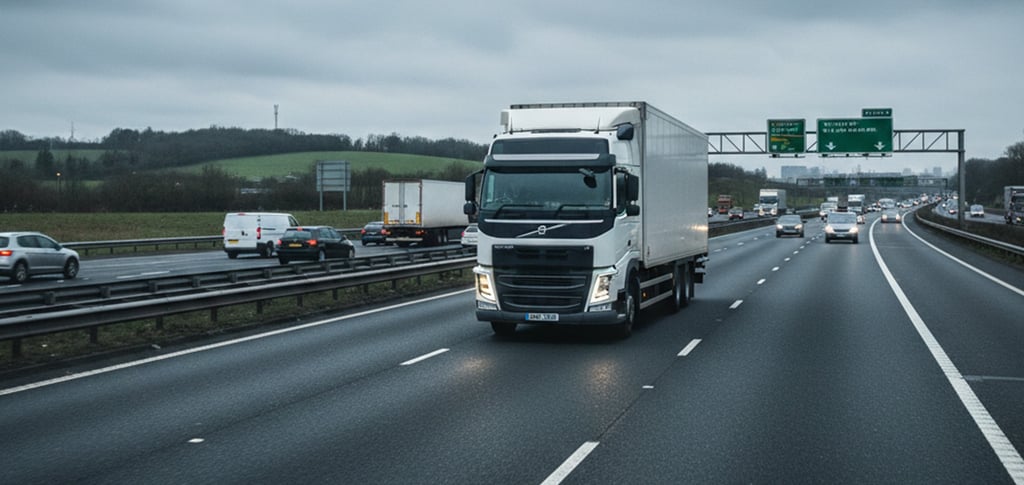

When the amber DPF lamp illuminates, check for error codes (P2002, P242F, P2463), confirm whether the truck has entered limp mode, and assess if you can safely continue driving to initiate a parked regen at the next services or if immediate roadside assistance is required.
Step-by-Step Roadside Triage:
Step 1: Check the Dashboard Lamp Behavior
Solid Amber: DPF soot load is 80-90% full. Continue driving at motorway speeds (50mph+) to attempt passive regen. You have 50-100 miles before escalation.
Flashing Amber: Soot load >90%. Parked regen required within 20-30 miles. Find a safe location (service station, layby).
Red DPF Lamp + Wrench Symbol: Critical failure. Stop immediately. Engine may derate to 1200 RPM max.
Step 2: Read Fault Codes (If Equipped with Diagnostics) Common codes:
P2002: DPF efficiency below threshold (general blockage)
P242F: DPF soot accumulation exceeded
P2463: DPF soot overload (imminent damage risk)
P20EE: SCR NOx catalyst low efficiency (may prevent regen)
Step 3: Assess Drivability
Can you maintain 50mph without power loss? → Continue to services, initiate parked regen.
Is the truck limiting to 30mph or showing "Check Engine"? → Call breakdown service. Forcing a regen in limp mode can crack the DPF substrate.
Step 4: Execute Parked Regen (If Safe to Proceed)
Park on level ground, apply parking brake
Ensure 1/2 tank fuel minimum (process consumes 1-2 liters)
Navigate to Vehicle Settings > Service Regen on dashboard
Confirm initiation—process takes 25-45 minutes
Do not interrupt: Turning off ignition mid-regen can cause thermal shock damage
UK-Specific Considerations
UK fuel quality (B7/B10 biodiesel blends), MOT emission standards, and cold/damp climate conditions all impact DPF performance. British operators face unique challenges including FAME fuel contamination, stricter smoke opacity tests, and prolonged low-temperature operation that suppresses passive regen.
Fuel Quality and FAME Content: Since 2022, UK forecourts shifted to B10 diesel (10% biodiesel). FAME (Fatty Acid Methyl Esters) has lower calorific value and higher moisture retention than pure mineral diesel. This means:
5-8% reduction in EGT at equivalent load
Increased injector coking (including the 7th injector)
Accelerated microbial contamination in fuel tanks (the infamous "diesel bug")
Recommendation: Source fuel from major operators (Shell, BP, Esso) with better FAME quality control. Avoid supermarket forecourts for commercial vehicles.
MOT Emissions Testing: From May 2018, the UK MOT includes a stricter diesel smoke opacity test. A partially blocked DPF can cause an instant fail at 1.5m⁻¹ (the legal limit). Many operators only discover DPF issues during the annual test, by which point damage may be irreversible.
Climate Impact: British weather (8-15°C average, high humidity) keeps engine coolant and exhaust temps lower than continental Europe. A Volvo FM operating in Scotland may struggle to hit 550°C EGT even on the A9, whereas the same truck in Spain would passively regen effortlessly. This is why UK fleets see 20-30% more DPF-related breakdowns than warmer EU regions.
Prevention Over Cure: Extending Volvo FM DPF Lifespan
Prevent DPF failures through quarterly professional cleaning (thermal or chemical), regular inspection of intake/boost systems for leaks, and adopting driving habits that promote passive regen—sustained motorway speeds above 50mph for at least 30 minutes per trip.
Driving Habits:
Weekly motorway run: 60+ minutes at 55-60mph under moderate load
Avoid short trips: Urban stop-start cycles are DPF killers
Don't ignore warnings: Every ignored amber lamp adds 10-20% more soot
While the troubleshooting steps above will get your Volvo FM's DPF back to functional status, they don't address the root chemical cause: incomplete combustion creating excess soot in the first place. Cheap diesel and ineffective additives leave unburned hydrocarbons that clog the DPF substrate, forcing these constant regen cycles.
To permanently improve fuel atomization and molecular combustion efficiency—reducing soot production by up to 40% before it even reaches the DPF—professional fleets are turning to catalytic fuel conditioning systems. This is the core of how FuelMarble technology works, using platinum-group metal catalysts to restructure diesel molecules at the molecular level, achieving cleaner burns, lower exhaust temps, and dramatically extended DPF service intervals. Instead of fighting the symptoms every 80 miles, you eliminate the cause.
DISCLAIMER: This article provides technical guidance for Volvo FM DPF troubleshooting based on field experience and manufacturer specifications. Always consult certified Volvo technicians for fault diagnosis and repairs. DPF-related modifications or deletions may violate UK emissions regulations (Road Vehicles Construction and Use Regulations 1986, as amended). FuelMarble is a third-party fuel efficiency device; results may vary based on fuel quality, engine condition, and operating patterns. Information accurate as of February 2026.
Designed to Go Further
Contact
FuelMarble © 2026. All rights reserved.


Delivery
Household
Marine
FuelMarble, 124 City Road, London, EC1V 2NX