
The Ultimate Guide to Heavy Duty Truck Maintenance & Emission Systems
Elias Thorne
2/16/202618 min read
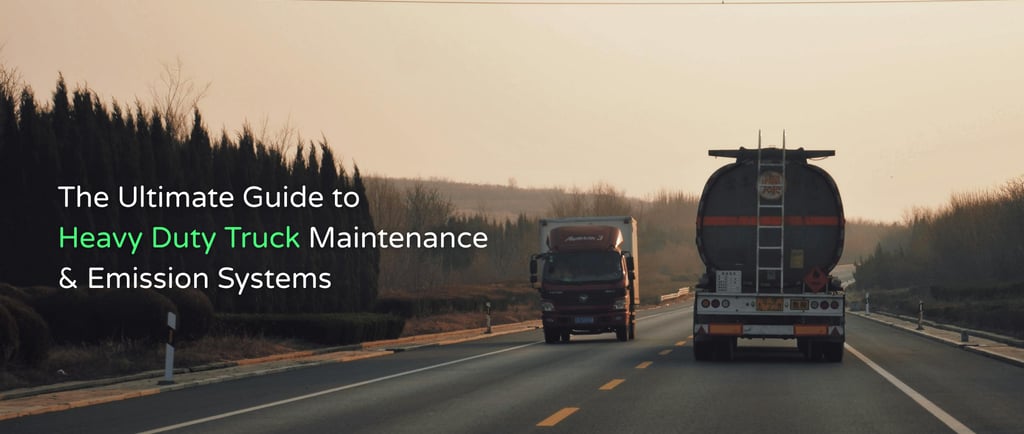

Euro VI heavy-duty trucks rely on an integrated exhaust aftertreatment chain — DOC, DPF, SCR, and ASC — that demands system-level maintenance, not piecemeal fixes. Understanding the chemistry, failure modes, and UK regulatory landscape is no longer optional for fleet operators: DVSA enforcement is tightening, Clean Air Zones now span seven English cities plus London's LEZ, and a single aftertreatment failure can cost £5,000–£10,000+ in parts alone — before factoring towing, labour, and lost revenue. This report provides the complete technical foundation for fleet managers and owner-operators running Euro VI trucks in the UK, with Volvo FH/FM/FMX-specific data, maintenance economics, and compliance details.
How DOC, DPF, SCR, and ASC work together as one integrated system?
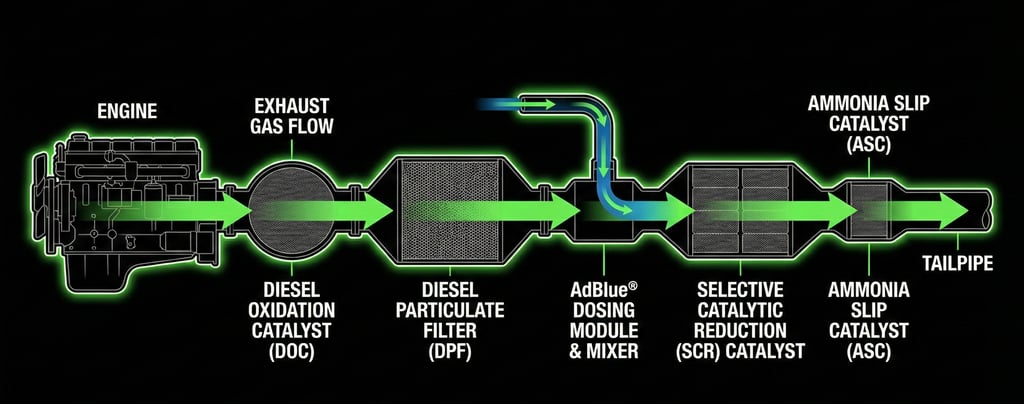
The Euro VI exhaust aftertreatment system follows a precise, interdependent sequence: Engine → EGR → DOC → DPF → AdBlue Injection + Mixer → SCR → ASC → Tailpipe. Each component depends on the others to function correctly, which is why treating any single element in isolation inevitably leads to cascading failures.
The Diesel Oxidation Catalyst (DOC) sits closest to the engine where exhaust temperatures are highest. Its platinum/palladium-coated ceramic honeycomb oxidises carbon monoxide (2CO + O₂ → 2CO₂, light-off at ~170–200°C), hydrocarbons (CₓHᵧ + O₂ → CO₂ + H₂O, light-off ~200–250°C), and critically converts NO to NO₂ (2NO + O₂ → 2NO₂). This NO₂ production is the linchpin of the entire system: it enables low-temperature passive DPF regeneration and powers the fast SCR reaction that achieves 10× faster NOx conversion below 300°C compared to the standard pathway.
The Diesel Particulate Filter (DPF) uses a wall-flow silicon carbide or cordierite monolith with alternating plugged channels, forcing exhaust gas through porous ceramic walls that trap >99% of particulate matter by mass and >97% by particle number down to 23 nm. Soot burns through two pathways: NO₂-assisted oxidation (C + 2NO₂ → CO₂ + 2NO at 250–400°C, enabled by the DOC's NO₂ output) and direct thermal oxidation (C + O₂ → CO₂, requiring >550°C during active regeneration).
AdBlue — 32.5% automotive-grade urea in deionised water (the eutectic concentration, with the lowest freezing point at -11°C) — is injected and mixed upstream of the SCR catalyst. The urea decomposes in two steps: thermolysis at >150°C produces ammonia and isocyanic acid ((NH₂)₂CO → NH₃ + HNCO), then hydrolysis converts HNCO to additional ammonia (HNCO + H₂O → NH₃ + CO₂). The SCR catalyst — typically copper-zeolite (Cu-SSZ-13) on Euro VI trucks — then uses three reaction pathways to convert NOx into harmless nitrogen and water. The standard SCR reaction (4NH₃ + 4NO + O₂ → 4N₂ + 6H₂O) dominates across a wide temperature range. The fast SCR reaction (4NH₃ + 2NO + 2NO₂ → 4N₂ + 6H₂O) operates 8–10× faster when the DOC achieves an optimal 1:1 NO:NO₂ ratio. An Ammonia Slip Catalyst (ASC) downstream catches any excess ammonia (4NH₃ + 3O₂ → 2N₂ + 6H₂O), keeping tailpipe NH₃ below the Euro VI limit of 10 ppm.
The interdependence is absolute. The DOC heats the DPF for active regeneration by oxidising injected fuel. It produces the NO₂ that enables low-temperature DPF passive regeneration and fast SCR conversion. The DPF sits before the SCR to protect the SCR catalyst from high regeneration temperatures. The ECU balances AdBlue dosing against ammonia slip using a sensor network — DAF's Euro VI system uses 44 sensors for closed-loop control. Remove or degrade any single component and the entire chain collapses.
Euro VI emission limits for the WHSC steady-state cycle are NOx 0.40 g/kWh, PM 0.01 g/kWh, CO 1.5 g/kWh, HC 0.13 g/kWh, and PN 8.0 × 10¹¹ #/kWh. The transient WHTC cycle permits slightly higher NOx (0.46 g/kWh) and CO (4.0 g/kWh). In-service conformity testing with PEMS applies a conformity factor of 1.5×, giving an effective on-road NOx limit of 0.69 g/kWh.
EGR (Exhaust Gas Recirculation) further integrates with this chain. By recirculating 10–30% of exhaust gas back to the intake, peak combustion temperatures drop 200–300°C, cutting engine-out NOx by 50–70%. Most Euro VI OEMs — including Volvo, DAF, and Mercedes — use cooled EGR primarily at low loads where SCR temperatures are insufficient, then bypass at highway cruise. Scania and Iveco took an SCR-only approach. The classic NOx/PM trade-off remains: more EGR means less NOx but more soot. The DPF catches the extra soot; the SCR handles remaining NOx.
DPF regeneration: passive, active, and forced — and what goes wrong in UK driving?
Three regeneration modes keep the DPF functional, each triggered by progressively higher soot loading thresholds.
Passive regeneration occurs continuously and invisibly during sustained highway driving. When exhaust temperatures reach 250–450°C — easily achieved at 50+ mph under load — the NO₂ produced by the DOC continuously oxidises trapped soot at low temperatures. This is not a discrete event; it happens constantly when the truck runs in its thermal sweet spot. Passive regen requires no driver input and produces no dashboard indication. For a UK long-haul operator running M1/M6 corridors, passive regeneration essentially keeps the DPF self-cleaning during normal motorway cruising.
Active regeneration is initiated by the ECU when soot loading reaches approximately 40–60% of capacity (roughly 3–6 g/L depending on the OEM calibration). The system injects fuel via a dedicated 7th injector or late post-injection, which the DOC oxidises exothermically, raising DPF temperatures to 550–620°C for direct thermal soot combustion. Active regeneration takes 15–30 minutes, occurs roughly every 300–500 miles, and imposes a 1–3% fuel penalty. It requires sustained engine load and cannot complete if the driver shuts down, vehicle speed drops too low, or a fault code interrupts the cycle.
Forced/parked regeneration becomes necessary when soot loading reaches >80–100% of capacity after repeated incomplete active regens. A technician initiates this stationary procedure using diagnostic equipment, raising engine speed and exhaust temperatures to 600–650°C for 30–60 minutes. While this is a standard protocol, technicians must understand how to force a manual DPF regen on a Volvo FM properly to prevent thermal damage, as performing this in an uncontrolled manner can lead to extreme tailpipe temperatures. Critically, if soot loading exceeds approximately 120% capacity or ~5 g/L, forced regeneration becomes unsafe — the risk of thermal runaway (temperatures exceeding 1,000°C that crack or melt the ceramic substrate) is too high, and the DPF must be removed for off-vehicle cleaning or replacement.
UK urban driving is the DPF's worst enemy. Stop-start city operations in London, Birmingham, Manchester, and other congested urban centres keep exhaust temperatures below 250°C for entire shifts. Passive regeneration never occurs. Cold starts require 2–5 minutes before the DOC reaches light-off and 10–15 minutes before the SCR achieves useful conversion efficiency. During this window, soot accumulates with no mechanism to clear it. Short urban delivery routes compound the problem: each start-stop cycle adds soot without burning any off, and active regenerations are interrupted before completion when the driver parks at the next delivery stop. UK cold weather further extends catalyst warm-up times.
The most damaging driver mistakes are ignoring dashboard DPF warning lights (allowing soot to reach critical levels), switching off the engine during active regeneration (which aborts the 15–30 minute burn cycle), and excessive idling (exhaust at 150–200°C, far below any regen threshold). Fleet managers should target under 25% idle time per truck and ensure urban delivery drivers complete at least one sustained motorway run periodically.
Why ash cannot burn off and demands physical cleaning?
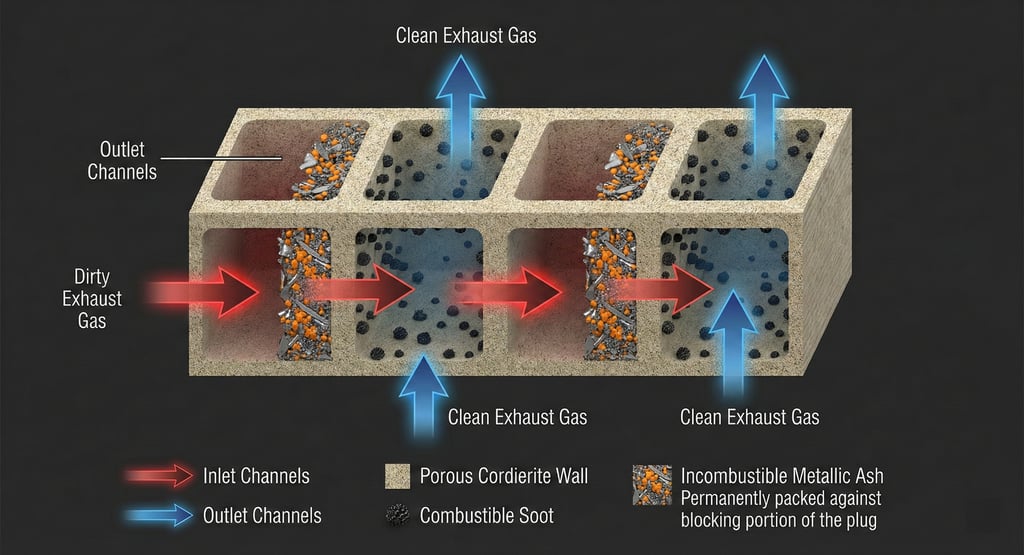
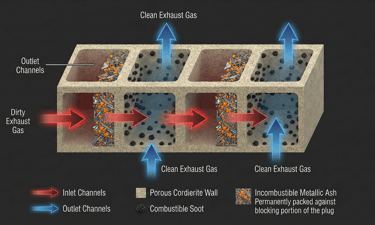
Soot and ash are fundamentally different materials that accumulate in the DPF simultaneously but respond to regeneration in opposite ways. Soot is carbon-based particulate from incomplete diesel combustion — it burns during regeneration. Ash is non-combustible metallic oxide residue primarily from engine oil additives — it cannot burn at any temperature and accumulates permanently.
Ash composition has been characterised in peer-reviewed studies (SAE 2011-01-1248). The primary compounds are calcium sulphate (CaSO₄) from calcium-based oil detergent additives, zinc phosphate (Zn₃(PO₄)₂) and zinc pyrophosphate (Zn₂P₂O₇) from ZDDP anti-wear additives, and various magnesium and calcium phosphate phases. Chevron's research found that when a DPF is torn down, up to 90% of the material inside is ash, not soot — and most originates from lubricant metallic additives, not fuel combustion.
Ash progressively reduces the DPF's effective volume. It accumulates as a thin layer along channel walls and as plugs toward the rear of filter channels. After approximately 53,000 km (33,000 miles), about 50% of material in the DPF is ash. After 241,000 km (150,000 miles), ash exceeds 80% of trapped material. As ash occupies more space, soot storage capacity decreases, forcing more frequent active regenerations — consuming more fuel and increasing thermal stress. The DPF differential pressure sensor cannot distinguish between ash and soot; it simply reads higher backpressure and triggers unnecessary regens.
Professional DPF cleaning is the only solution for ash removal. The leading methods are thermal "bake and blow" (heating in a specialised oven at 550–650°C for 8–12 hours to burn residual soot, then reversing with compressed air to expel ash), aqueous cleaning (high-pressure water with air pulses to flush both soot and hardened ash — the most effective method for heavy-duty units), and pneumatic cleaning (compressed air alone, quickest but least thorough for compacted ash).
Recommended cleaning intervals for heavy-duty trucks vary by duty cycle. OEM guidance typically suggests every 200,000–400,000 miles for highway-dominant operations with proper low-SAPS oil. UK DPF specialists recommend every 150,000–250,000 km (93,000–155,000 miles) for demanding conditions. Urban stop-start duty cycles may require cleaning as frequently as every 80,000–100,000 miles. Volvo recommends DPF ash cleaning approximately every 200,000–250,000 miles (320,000–400,000 km) for long-haul applications.
The cost differential makes a compelling case for cleaning over replacement. Professional HGV DPF cleaning costs £300–£600 per off-vehicle clean in the UK. A new OEM DPF replacement costs £2,000–£5,000+ for parts alone. Complete aftertreatment box replacement runs £5,000–£10,000+. DPF cleaning restores the filter to >95% of original performance, making it one of the highest-ROI maintenance items for any fleet.
SCR, AdBlue, and the 20 km/h nightmare on Volvo Euro VI trucks
AdBlue consumption on heavy-duty trucks runs at approximately 3–6% of diesel consumption — typically 1.5–2.0 litres per 100 km for a 40-tonne GCW long-haul truck. The ISO 22241 multi-part standard governs everything: ISO 22241-1 specifies urea content of 31.8–33.2% (m/m), strict limits on heavy metals and impurities, and a pH of ~9.0–9.5; ISO 22241-3 covers handling and storage; ISO 22241-4 specifies refilling interfaces. Only products meeting this standard may legally carry the AdBlue® trademark (owned by the VDA). Shelf life is 18 months below 25°C, dropping to 12 months at higher temperatures. AdBlue must be stored in polyethylene, polypropylene, or stainless steel — never aluminium, copper, or carbon steel, as trace metal contamination destroys SCR catalysts.
AdBlue crystallisation is one of the most costly and common SCR failures. When exhaust temperatures fall below ~200°C — during idling, urban crawling, or cold starts — urea decomposition is incomplete. Instead of converting fully to ammonia, it forms solid deposits of biuret, cyanuric acid, and ammelide that block injectors, pipes, and SCR catalyst faces. Contributing factors include faulty/clogged AdBlue injectors producing poor atomisation, failed mixing elements causing urea to impinge on cold pipe walls, and non-ISO 22241-compliant AdBlue with impurities or wrong concentration. White crystalline deposits visible around the AdBlue injector tip are the telltale sign.
What happens when AdBlue runs out on a Volvo FH, FM, or FMX follows a legally mandated escalation under EC Regulation 582/2011 (Annex XIII), retained in UK law post-Brexit?
At approximately 10–12% tank remaining, an amber warning and "Refill AdBlue" message appears. As levels continue dropping, the countdown escalates through 8 hours, then 4 hours, then 2 hours, then "at next start." Below ~5%, a red warning with continuous buzzer sounds alongside severe torque reduction. Once the tank is empty or critically low, the truck's maximum speed is restricted to 20 km/h — rendering it entirely unusable for commercial operation. On the next engine restart, the vehicle may not start at all, or will restart only in this severely restricted mode. Refilling AdBlue alone may not restore normal operation; dealer diagnostic equipment is sometimes needed to clear fault codes. Volvo AdBlue tank sizes range from 32 to 112 litres depending on chassis configuration.
5 technical causes of aftertreatment failure every fleet manager must address
Excessive idling is the silent killer. At idle, exhaust temperatures sit at 100–200°C — far below the 250°C minimum for passive DPF regeneration or effective SCR dosing. UK fleet data from the Transport Research Laboratory shows average HGV idle time of 12% of total engine run time, though poorly managed fleets can reach 50%. Each idling hour consumes approximately 2 litres of diesel while simultaneously loading the DPF with soot that cannot regenerate, crystallising AdBlue in injectors and pipes, and fouling EGR valves and turbocharger VGT vanes with carbon deposits.
Non-Low-SAPS engine oil dramatically accelerates ash accumulation. Euro VI trucks require ACEA E6/E8 or E9/E11 oils with sulphated ash ≤1.0%, phosphorus ≤0.08% (E6/E8) or ≤0.12% (E9/E11), and sulphur ≤0.3% (E6/E8) or ≤0.4% (E9/E11). Using a conventional ACEA E4/E7 oil (sulphated ash ~1.5–2.0%) in a DPF-equipped engine approximately doubles the rate of metallic ash accumulation, potentially halving DPF cleaning intervals and leading to premature failure. Chevron's Delo 600 ADF with ultra-low 0.4% sulphated ash demonstrated a 60% reduction in ash buildup and up to 2.5× extended maintenance intervals. Volvo specifies VDS-4.5 for Euro 6 Step A/B/C engines (D11K, D13K; available in 10W-30 and 15W-40) and VDS-5 exclusively for 2021+ Euro 6 Step D engines (5W/30 only; not backward compatible).
Fuel injector faults — specifically dribbling or poorly atomising injectors — create fuel-rich zones producing excess soot that can increase DPF loading by several hundred percent from a single misfiring cylinder. The DOC can be overwhelmed by raw hydrocarbons, causing excessive exothermic reactions that damage the catalyst substrate.
EGR valve sticking from carbon-oil sludge buildup disrupts the combustion balance. A stuck-open EGR recirculates too much inert gas, reducing oxygen availability and dramatically increasing soot production while simultaneously overloading the DPF. A stuck-closed EGR allows combustion temperatures to spike, overwhelming the SCR with elevated NOx beyond its conversion capacity.
Coolant leaks into the exhaust — typically from EGR cooler micro-cracks caused by thermal fatigue — are the most catastrophic failure mode. Ethylene glycol from antifreeze creates hard white ash deposits that cannot be cleaned by regeneration or standard DPF cleaning methods. Silicates and phosphates from coolant additive packages permanently poison DOC and SCR catalyst washcoats by blocking active sites. This failure often requires complete aftertreatment system replacement at £10,000–£20,000+, making it the most expensive single-event failure in the entire truck.
UK compliance: DVSA enforcement, MOT criteria, LEZ, and Clean Air Zones
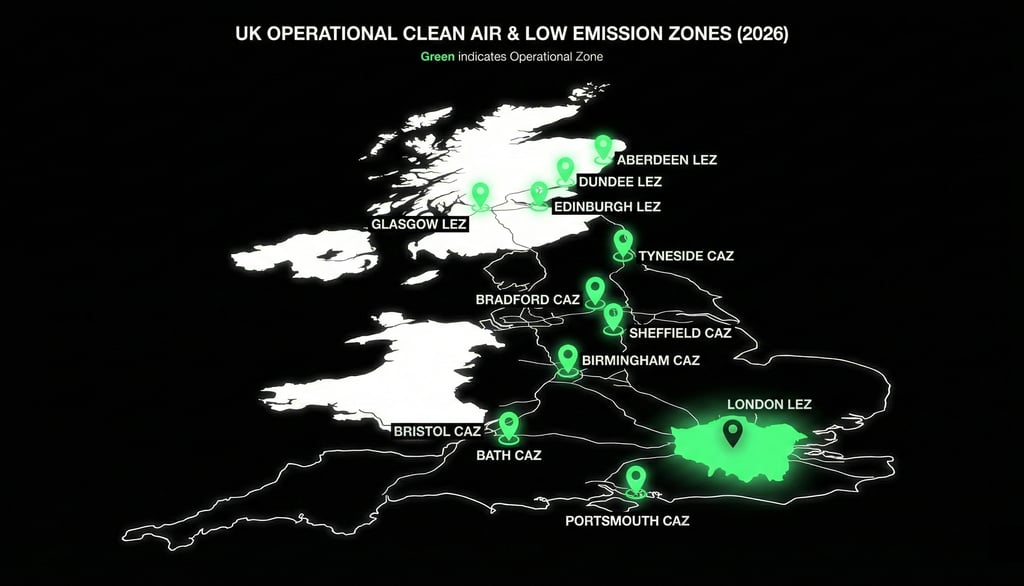
DVSA roadside enforcement is intensifying. Vehicle examiners carry portable smoke opacity meters that detect DPF tampering within minutes, and increasingly deploy portable NOx probes for random checks and ANPR-linked smoke cameras on major A-roads. Penalties for emissions tampering follow a graduated system: fixed penalties up to £300 per offence plus prohibition notices (vehicle taken off road until repaired). Commercial vehicle emissions tampering carries maximum fines of £2,500 at magistrates' court, with unlimited fines and up to 12 months' imprisonment for serious deliberate fraud at Crown Court. Businesses performing DPF/AdBlue deletes face market surveillance fines of up to £50,000 per offence under the Road Vehicles (Approval) Regulations 2020. DVSA data for April–December 2024 recorded 8,613 HGV mechanical inspections yielding a 27.63% prohibition rate (2,379 prohibitions).
MOT (annual test) emissions criteria were significantly tightened on 20 May 2018 following the EU Roadworthiness Directive. The smoke opacity default limit for vehicles first used on or after 1 January 2014 (all Euro VI) is 0.7 m⁻¹, halved from the previous 1.5 m⁻¹. Many Euro VI vehicles have even stricter manufacturer plate values of 0.2–0.5 m⁻¹. Any visible smoke from a DPF-equipped vehicle is an automatic major defect and immediate fail. Inspectors must verify that emissions control equipment — DPF, SCR, EGR, catalytic converters — is physically present and shows no signs of removal, modification, or tampering. A hollow or internally gutted DPF canister fails even if the shell is present. All tampering is reported to DVSA.
London's Low Emission Zone (LEZ) — not the ULEZ — applies to HGVs over 3.5 tonnes. Since 1 March 2021, HGVs must meet Euro VI to drive in the LEZ without charge. Non-compliant HGVs face daily charges of £100 (meeting Euro IV PM but not Euro VI) or £300 (not meeting Euro IV PM). The LEZ covers most of Greater London 24/7/365, excluding the M25. Penalty Charge Notices for non-payment are £1,000 (reduced to £500 if paid within 14 days). TfL enforces via ANPR cameras and provides an online vehicle checker at tfl.gov.uk.
Seven English Clean Air Zones are now operational, all requiring Euro VI for compliant HGV access:
Bath (Class C, March 2021): £100/day for non-compliant HGVs
Birmingham (Class D, June 2021): £50/day
Bradford (Class C, September 2022): £50/day
Bristol (Class D, November 2022): £100/day
Portsmouth (Class B, November 2021): £50/day
Sheffield (Class C, February 2023): £50–60/day
Tyneside/Newcastle-Gateshead (Class C, January 2023): £50/day
Scotland's four LEZs (Glasgow, Edinburgh, Aberdeen, Dundee) began charging from June 2024 under separate legislation. All zones use ANPR enforcement and standardised PCNs of £120 (reduced to £60 within 14 days). Operators can check all zones simultaneously via the GOV.UK vehicle checker.
Operator licence (O-licence) implications are severe. Emissions non-compliance feeds into the DVSA's Operator Compliance Risk Score (OCRS) — roadside prohibitions and MOT failures increase the score toward red status, triggering more frequent stops and potential referral to the Traffic Commissioner. Deliberate tampering (fleet-wide DPF/AdBlue emulator use) may be treated as a repute issue — the most serious classification, potentially resulting in mandatory licence revocation at Public Inquiry. In 2021/22, Traffic Commissioners held 920 Public Inquiries with regulatory action in the vast majority. Transport managers can lose professional competence status and be personally disqualified.
Volvo FH, FM, FMX: known aftertreatment failure modes and fault codes
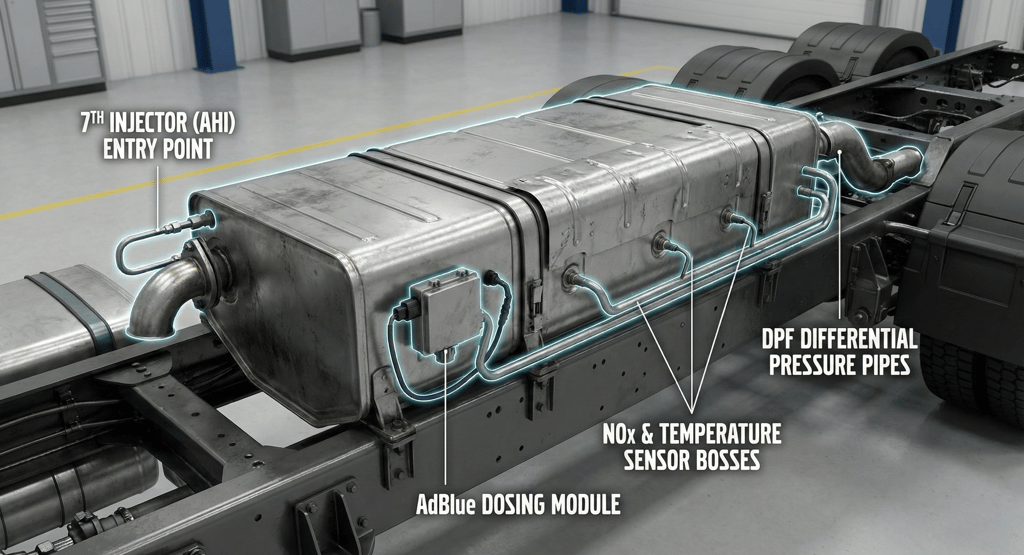
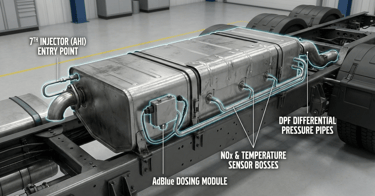
Volvo's Euro VI aftertreatment system uses a "one-box" design integrating the DOC, DPF, and SCR into a compact unit mounted to the right frame rail. The system is managed by the Aftertreatment Control Module (ACM) — Continental ACM 2.1 — working alongside the Engine Management ECU (EMS 2.3/2.4). Key components include two NOx sensors (upstream and downstream of SCR), multiple exhaust temperature and differential pressure sensors, and knowing the top 5 symptoms of a clogged DPF in Volvo FM trucks is essential for identifying these faults early before they immobilise the vehicle.
The 7th injector (AHI) is among the most common failure points on Volvo Euro VI trucks. The AHI module contains non-replaceable valves that degrade over time. When it fails, passive, active, and forced DPF regenerations all fail completely. This mechanical breakdown is a frequent reason why your Volvo FM manual DPF regen keeps failing, as the truck is left with no alternative regen pathway. Fault code SPN 5443 FMI 7 (mechanical system not responding) indicates a stuck-closed 7th injector. Related codes include P2697 (AHI open circuit), P2698 (AHI functional failure), and P2699 (AHI short circuit low).
AdBlue pump failures are extremely common, with fault code P218F92 being well-documented across the Volvo Euro VI range. Root causes include damaged pump motor, faulty level sensor/gauge, and AdBlue leaks. NOx sensor failures generate codes P220064 (implausible signal), P220093 (non-operating error), and P22BF92 (NOx performance fault). Replacement cost per NOx sensor is approximately £600–£700, but the sensor may fail again quickly if the underlying dosing unit or pump fault is not addressed first.
DPF differential pressure sensor issues are frequent — the two small tubes running to the DPF commonly become blocked with soot. Cleaning with compressed air is the recommended first-line maintenance before replacing the sensor. Key DPF-related codes include SPN 3251 FMI 5 (DPF differential pressure below normal), SPN 3936 FMI 1 (DPF system below operational range), and P2453/P2454 (DPS circuit issues).
Typical UK repair costs for Volvo aftertreatment components: NOx sensor ~£600–700 each (two per truck); AdBlue pump module £1,500–2,500; complete AdBlue system overhaul £4,200–5,000+ excluding labour; DPF cleaning £300–600; DPF replacement £2,000–5,000+; SCR catalyst replacement £2,000–4,000; 7th injector/AHI module £300–800 (aftermarket). Volvo dealer labour rates run £100–150+/hour. A single aftertreatment breakdown event including towing, parts, labour, and downtime typically reaches £3,000–£9,000+.
Preventive maintenance delivers 3–9× cost savings over reactive repairs
The business case for structured preventive maintenance is overwhelming. Industry research consistently shows reactive maintenance costs 3–9× more than preventive maintenance, with emergency roadside repairs costing 2–4× more than the same repair performed during scheduled shop time. Every £1 spent on preventive maintenance saves £3–£9 in reactive repair and downtime costs.
Unplanned downtime costs UK fleets approximately £350–£600+ per vehicle per day, encompassing towing (which can exceed £1,600 per event for HGVs), emergency repair labour at dealer rates, expedited parts sourcing, missed delivery penalties, and substitute vehicle hire. A typical fleet experiences 8.7 days of unplanned downtime per truck per year. For a 25-truck fleet averaging 2 breakdowns per truck annually at £4,000 per event, that is £200,000 in annual unplanned costs.
Fleets implementing structured PM programmes see 30–40% fewer unplanned breakdowns. Improving PM compliance from 70% to 95% reduces breakdowns by half, which is a critical lever for those analyzing how to improve fleet management company profitability in a challenging economic climate. One telling metric: average fleet trucks break down every 10,000 miles, while top-performing fleets with mature PM programmes achieve 75,528 miles between breakdowns — a 7.5× improvement. DPF and aftertreatment issues are consistently cited as the leading cause of fleet breakdowns, with the American Trucking Associations estimating aftertreatment-related repairs account for approximately 13% of total maintenance costs for heavy-duty trucks.
For aftertreatment systems specifically, the PM programme should incorporate DPF differential pressure monitoring at every service, scheduled DPF cleaning at manufacturer-recommended intervals, AdBlue system inspection (injector, pump, lines, and tank quality), EGR valve and cooler integrity checks, NOx and temperature sensor verification, turbocharger condition assessment, and strict adherence to Low-SAPS oil specifications.
Low-SAPS oil: the single cheapest way to protect your DPF investment
Euro VI heavy-duty trucks require ACEA E6/E8 or ACEA E9/E11 category oils — not the C1/C2/C3/C4 categories, which are for passenger cars. The 2022 ACEA update introduced E8 and E11 as successors to E6 and E9 respectively, with enhanced requirements for oxidation stability (Volvo T-13 test), aeration control (COAT test), and biodiesel compatibility.
The critical SAPS limits for ACEA E8 (replacing E6) are sulphated ash ≤1.0%, phosphorus ≤0.08%, and sulphur ≤0.3%. For ACEA E11 (replacing E9): sulphated ash ≤1.0%, phosphorus ≤0.12%, and sulphur ≤0.4%. Compare these to conventional ACEA E4/E7 oils at sulphated ash ≤2.0% — a 50% reduction in the primary DPF-fouling metric. At typical heavy-duty oil consumption rates, a high-SAPS oil deposits roughly twice the metallic ash per kilometre, directly halving the interval between required DPF cleanings.
Low-SAPS oils cost 15–40% more per litre than conventional mineral or semi-synthetic alternatives — approximately £3.95–4.98/L for premium E6/E9 synthetics versus £2.50–3.50/L for E7 mineral oils. However, extended drain intervals (up to 100,000 km with products like Castrol Vecton Long Drain versus 30,000–50,000 km for conventional oils) mean fewer oil changes per year (2–3 versus 4–6), and dramatically longer DPF cleaning intervals deliver a net cost saving over the vehicle's life. The maths is straightforward: a single premature DPF replacement at £3,000–5,000 wipes out years of savings from cheaper oil.
Leading products meeting E6/E9 specifications include Shell Rimula R6 LME Plus 5W-30, Mobil Delvac 1 LE 5W-30, Castrol Vecton Long Drain 10W-40 E6/E9, Total Rubia Optima 3100 10W-40, and Chevron Delo 600 ADF. Volvo specifically requires VDS-4.5 for D11K and D13K Euro 6 Step A/B/C engines (10W-30 or 15W-40, drain intervals up to 60,000 miles long-haul) and VDS-5 exclusively for 2021+ Step D engines (5W/30 only, not backward compatible — identifiable by 2 oil filters versus 3 on earlier models).
FuelMarble: the coolant-side fuel efficiency device that leaves your DPF alone
FuelMarble is a Japanese-engineered coolant additive device — not a fuel additive — developed over 10 years in collaboration with Kurume Industrial University and Kyushu Institute of Technology. Dropped directly into the coolant reservoir with no tools or modifications, it works by stabilising engine combustion temperatures, producing a more consistent air-fuel ratio and more complete combustion. Independent real-world tests have recorded fuel efficiency gains of 15–21.75% and CO₂ reductions exceeding 10%. Critically for DPF-equipped fleets, because FuelMarble operates entirely through the cooling system, it introduces zero foreign substances into the combustion chamber or exhaust aftertreatment chain. This is a vital distinction for operators asking is FuelMarble a fuel additive, as it contrasts sharply with cheap fuel additives whose metallic compounds accumulate as non-combustible ash inside the DPF. Understanding how cheap diesel additives destroy commercial DPFs highlights why avoiding in-tank additives is often the safer route for Euro VI longevity.
Conclusion: system thinking wins, component thinking loses
The overarching message for UK fleet operators is clear. Euro VI aftertreatment is not a collection of bolt-on parts — it is a tightly integrated chemical and thermal system where every component depends on every other. The DOC, DPF, SCR, and ASC must be maintained together, with upstream causes (injectors, EGR, turbo, coolant integrity, oil specification) addressed proactively to prevent cascading downstream failures.
The UK regulatory environment now makes compliance non-negotiable. Seven Clean Air Zones, London's LEZ at £100–300/day, MOT opacity limits halved since 2018, DVSA deploying portable NOx probes and ANPR smoke cameras, and Traffic Commissioners willing to revoke O-licences over emissions fraud collectively create a regime where the cost of non-compliance dwarfs the cost of proper maintenance.
The economics favour prevention overwhelmingly: £300–600 for DPF cleaning versus £2,000–5,000+ for replacement, 3–9× cost savings from preventive versus reactive maintenance, and Low-SAPS oil that costs 15–40% more per litre but extends DPF life by up to 2.5×. For Volvo FH/FM/FMX operators specifically, watching the 7th injector, AdBlue pump, NOx sensors, and DPF differential pressure sensor — and catching problems at the fault-code stage rather than the limp-mode stage — is the difference between a scheduled £600 service and an unplanned £9,000 roadside event. The trucks that run the most profitably in the UK today are the ones whose operators understand that aftertreatment health is not a cost centre — it is the cost centre's greatest savings opportunity.
Disclaimer: The information provided in this technical reference is for educational and general informational purposes only and does not constitute professional mechanical or legal advice. While every effort has been made to ensure the accuracy of the technical data, maintenance guidelines, and UK regulatory compliance details (such as DVSA standards and Clean Air Zone rules), fleet operators should always consult official OEM service manuals, qualified technicians, and current government legislation before performing maintenance or altering fleet operations. We assume no liability for any vehicle damage, voided warranties, financial losses, or regulatory penalties resulting from the application of this information or the use of any third-party products or additives discussed.
Designed to Go Further
Contact
FuelMarble © 2026. All rights reserved.


Delivery
Household
Marine
FuelMarble, 124 City Road, London, EC1V 2NX