HGV DPF Cleaning Intervals: The Definitive Fleet Guide
Most HGV fleet managers know they need to clean their diesel particulate filters. Very few know when, and the difference between a reactive and a scheduled approach to heavy-duty truck emissions maintenance can run to thousands of pounds per vehicle. A blocked DPF triggers limp mode, grounded vehicles, DVSA prohibition notices, and replacement bills that dwarf the cost of preventive cleaning. This guide gives you the exact intervals, the variables that shift them, and a scheduling framework you can implement across your fleet today.
Why HGV DPFs Need Scheduled Ash Cleaning: Not Just Regeneration
HGV DPFs require professional ash-removal cleaning on a fixed mileage schedule because regeneration (whether passive, active, or forced) only burns off soot. It cannot remove ash. Ash is the non-combustible residue of engine oil additives and metal particles that accumulates permanently until a specialist removes it off-vehicle. A fleet relying on regeneration alone will eventually ground vehicles. The only question is when.
HGV DPFs require professional ash-removal cleaning on a fixed mileage schedule because regeneration (whether passive, active, or forced) only burns off soot. It cannot remove ash. Ash is the non-combustible residue of engine oil additives and metal particles that accumulates with every combustion cycle and builds until it physically blocks the filter substrate.
- Passive regeneration occurs automatically during sustained motorway driving above approximately 60 mph, where exhaust temperatures reach 600°C+ and oxidise soot deposits
- Active regeneration is triggered by the ECU when soot levels hit approximately 45% of filter capacity. Extra fuel is injected to raise exhaust temps and burn the soot load
- Forced regeneration is workshop-initiated when passive and active cycles have failed to clear the filter. Costs £85–£300 per event and does not remove ash
- Ash cleaning is the only process that removes non-combustible ash. It requires the DPF to be removed from the vehicle and cleaned off-site by a specialist
This applies to every Euro VI HGV operating on UK roads: Volvo FM, DAF XF, Scania R-Series, MAN TGX, Mercedes Actros. It does NOT apply to Euro V and older vehicles not fitted with a DPF as standard.
How DPF Cleaning Works: 4-Stage Sequence
- 1Passive Regeneration, Soot burns off automatically during sustained motorway driving (600°C+). Ash remains. No operator action needed.
- 2Active Regeneration, ECU injects fuel to raise exhaust temps when soot hits ~45% capacity. Soot burns off. Ash remains. Operator may notice a brief fuel increase.
- 3Forced Regeneration, Workshop-initiated when passive/active regens are failing. Clears soot only. Costs £85–£300. Does NOT remove ash. Cannot be repeated indefinitely.
- 4Professional Ash Cleaning, Off-vehicle specialist process. Removes 95%+ of accumulated ash and soot. Required every 60,000–150,000 km depending on duty cycle. The only step that fully restores DPF performance.
A Wiltshire-based ambient distribution fleet running 12 Volvo FM 460s on A-road and motorway routes found their DPFs needed professional cleaning every 14 months, roughly every 130,000 km. When they switched two vehicles to urban delivery routes without updating the maintenance schedule, both required unplanned cleaning at 9 months. The interval shift cost the fleet £1,100 in reactive callout fees that a schedule review would have prevented.
How Often Should You Clean an HGV DPF? Intervals by Duty Cycle
The standard professional ash-removal interval for Euro VI HGV DPFs is 100,000–150,000 km, but this contracts significantly under stop-start and short-haul duty cycles. Fleet managers who apply the same interval across a mixed fleet will consistently find urban vehicles failing between scheduled cleans. Urban operations need cleaning at 60,000–80,000 km or every 10 months, whichever comes first.
The standard professional ash-removal interval for Euro VI HGV diesel particulate filters is every 100,000–150,000 km (62,000–93,000 miles), but this figure contracts significantly under stop-start and short-haul duty cycles. Fleet managers who apply the same interval across a mixed fleet (long-haul and urban) will consistently find urban vehicles failing between scheduled cleans.
- Long-haul motorway (70–80% motorway miles): 130,000–150,000 km between ash cleans, passive regen operates effectively, soot load stays low
- Mixed regional distribution (40–60% A-road/motorway): 90,000–110,000 km, active regen cycles more frequent, ash builds at moderate rate
- Urban last-mile and stop-start operations: 60,000–80,000 km, or once per year whichever comes first, passive regen rarely completes; active regen frequently interrupted
- High-idle applications (refrigeration units, site vehicles): every 50,000 km or 1,000 engine hours, idling produces disproportionate ash load relative to distance covered
- Construction and plant-adjacent HGVs: 50,000–70,000 km, low-speed, high-load cycles accelerate filter saturation
This applies to fleets running Euro VI vehicles from 2014 onwards equipped with EATS (exhaust after-treatment systems). HVO operators will often see extended intervals compared to ULSD. HVO burns significantly cleaner, reducing the soot burden on the DPF. However, ash accumulation from engine oil burn-off is unaffected by fuel type, meaning professional ash cleaning remains necessary regardless of fuel. HVO extends the interval; it does not eliminate the need.
| Duty Cycle | Recommended Interval | Time-Based Trigger | Cleans/Year |
|---|---|---|---|
| Long-haul motorway (70%+ motorway) | 130,000–150,000 km | 14 months max | ~1× |
| Mixed regional (40–60% A-road/motorway) | 90,000–110,000 km | 12 months max | 1–2× |
| Urban last-mile / stop-start | 60,000–80,000 km | 10 months max | 2× |
| High-idle (refrigeration / site vehicles) | 50,000 km / 1,000 engine hours | Whichever first | 2–3× |
| Construction / plant-adjacent HGV | 50,000–70,000 km | 10 months max | 2–3× |
A National DPF case study documented a 38-vehicle multi-drop fleet based in Birmingham where 22 urban-duty trucks were presenting for unplanned cleaning at 65,000–70,000 km, well before the fleet's blanket 120,000 km schedule. The operator switched to a duty-cycle-segmented PMI, cutting unplanned DPF downtime events from 11 per quarter to 2 within six months.
Warning Signs Your HGV DPF Is Overdue for a Professional Clean
A DPF approaching saturation gives consistent, readable signals across multiple vehicle systems. The critical mistake most operators make is treating the DPF warning light as the trigger for action, at that point, the filter is already severely restricted. Acting on early indicators (regen frequency increase, fuel consumption rise) avoids the forced regen and unplanned downtime that follow.
A DPF approaching saturation gives consistent, readable signals across multiple vehicle systems. The critical mistake most operators make is treating the DPF warning light as the trigger for action, at that point, the filter is already severely restricted and active regen is failing. The signs below appear in sequence; acting on early indicators avoids the forced regen and unplanned downtime that follow.
- Increased fuel consumption (3–8% above baseline): A partially blocked DPF creates back-pressure that forces the engine to work harder. If a vehicle's mpg drops without a change in load or route, check DPF restriction data via the diagnostic port before assuming injector or turbo issues
- More frequent active regen cycles: Normal active regen occurs every 300–500 km in mixed-duty conditions. If telematics data shows regens every 150–200 km, the filter is carrying excess soot load and ash cleaning is overdue
- DPF warning light (amber): Soot load typically at 70–80% capacity. Active regen is no longer keeping pace. Vehicle can still operate but professional cleaning should be booked within 2 weeks
- DPF warning light (red) / limp mode: Filter at or near full blockage. Vehicle restricted to low speed/power. This is a grounded truck, forced regen or off-vehicle cleaning required immediately
- Visible black or blue-white smoke at idle: Incomplete combustion signal. Can indicate oil contamination of the DPF substrate or a failed regeneration cycle that has damaged injectors
This applies when monitoring is done via telematics or workshop diagnostics. It does NOT apply as a checklist for vehicles already showing the red DPF warning light, those require immediate professional assessment, not further monitoring.
DVSA Enforcement: 2024 Data
Between April and December 2024, DVSA officers conducted 8,613 HGV mechanical inspections and issued 2,379 prohibition notices, a 27.63% failure rate. DPF-related faults, visible smoke, and aftertreatment system failures are among the most common triggers for roadside prohibitions. A documented DPF cleaning schedule filed alongside your PMI records is your first line of evidence in any DVSA compliance review.
A Merseyside-based 24-vehicle aggregate haulage fleet running MAN TGX 26.500s was alerted by telematics data showing average regen frequency had dropped from 420 km to 210 km across three trucks in their urban tipping circuit. Fleet engineers booked those vehicles for DPF ash cleaning at 78,000 km rather than waiting for the standard 120,000 km PMI. Total cleaning cost: approximately £1,200 across the three vehicles, avoiding one grounded vehicle day at their daily hire rate of £680 meant the early intervention paid back 1.8× in direct cost terms alone.
What Happens If You Miss HGV DPF Cleaning Intervals?
Skipping scheduled DPF ash cleaning does not result in a failed filter at a predictable point, it results in a chain of escalating failures, each more expensive than the last. The cost curve from missed intervals to DPF replacement runs from £315/month in wasted regen fuel to £4,200+ in full replacement costs, plus £445–£760/day vehicle downtime and potential DVSA prohibition.
Skipping scheduled DPF ash cleaning does not result in a failed filter at a predictable point, it results in a chain of escalating failures, each more expensive than the last. The cost curve from missed intervals to DPF replacement is steep. Understanding it is the strongest argument for a scheduled programme.
- Stage 1: Increased forced regen frequency: Each forced regen consumes an additional 1–1.5 gallons (4.5–6.8 litres) of diesel per event. A fleet running 50 unnecessary regens per month wastes approximately 225–340 litres of diesel, at current diesel prices around £1.40/litre, that's £315–£476/month in wasted fuel per vehicle
- Stage 2: Oil dilution: Active regen injects raw fuel into cylinders; when regen fails to complete, unburned fuel drains into the sump. Oil dilution degrades lubrication, shortens engine service intervals, and can void manufacturer warranty
- Stage 3: EGT sensor and SCR system damage: Excessive soot in the aftertreatment system overwhelms EGT sensors and can contaminate the SCR catalyst downstream, adding £500–£1,500 in component repair costs
- Stage 4: Full DPF failure and replacement: HGV DPF replacement costs several thousand pounds in parts alone, plus labour, vehicle downtime at £445–£760 per day, and potential DVSA action if the vehicle was driven while non-compliant
- Stage 5: DVSA prohibition: Operating an HGV with a non-functioning or missing DPF results in a prohibition notice, potential operator licence review, and regulatory audit of the entire fleet maintenance record
This applies specifically to operators who have not scheduled ash cleaning and are relying on reactive maintenance. It does NOT apply to fleets operating active exchange programmes with specialist DPF cleaning contractors, those vehicles rarely reach Stage 2.
27.63%
of DVSA HGV mechanical inspections resulted in prohibition notices (Apr–Dec 2024)
Source: DVSA / TotalCompliance enforcement data, 2024, 8,613 inspections, 2,379 prohibitions
A regional Scottish haulage operator running six DAF XF 530s on construction site contracts missed DPF cleaning on one vehicle for 18 months. When the vehicle finally entered the workshop with a red DPF warning and limp mode, the assessment found oil dilution at critical levels, two failed EGT sensors, and a DPF substrate with 580g of accumulated ash, nearly three times the average 200g accumulation at a scheduled clean interval. Total repair bill: £4,200 including DPF replacement and engine assessment. A scheduled clean at 90,000 km would have cost approximately £350.
You can read our DPF cleaning cost guide for UK commercial fleets for a full breakdown of cleaning, forced regen, and replacement costs to build into your maintenance budget.
The Role of Fuel Quality and Combustion Efficiency in DPF Interval Length
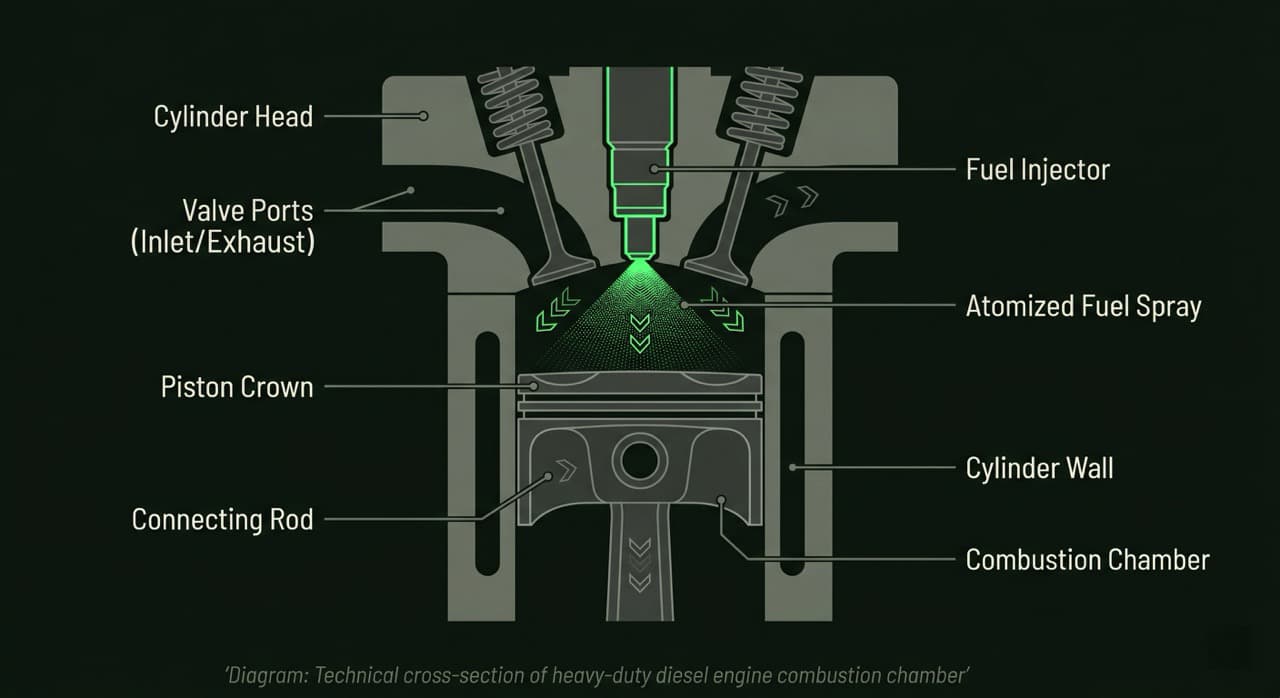
DPF ash cleaning intervals are not fixed by mileage alone, combustion quality inside the engine directly determines how much soot and ash the DPF accumulates per kilometre. Fleets running engines with degraded combustion efficiency saturate their DPFs significantly faster than manufacturer intervals suggest. Addressing combustion at the source is the upstream lever most operators overlook.
DPF ash cleaning intervals are not fixed by mileage alone, combustion quality inside the engine directly determines how much soot and ash the DPF accumulates per kilometre. Fleets running engines with degraded combustion efficiency, from worn injectors, incorrect timing, or fuel quality issues, saturate their DPFs significantly faster than manufacturer intervals suggest. Addressing combustion at the source is the upstream lever most operators overlook.
- Injector health: Worn or partially-blocked injectors produce a poor spray pattern, leading to incomplete combustion and elevated particulate output. A single degraded injector can increase DPF loading by 15–25% per cycle
- Fuel quality: Ultra-low sulphur diesel (ULSD) contains metallic and sulphur-based additives whose combustion residues form the ash accumulation in DPF substrates. Higher-quality, lower-additive fuels produce less ash per litre burned
- Engine oil specification: Using engine oil outside the OEM viscosity and additive specification contributes directly to DPF ash loading. Euro VI trucks require ACEA E6 or E9 rated oils, substituting lower-spec oils accelerates ash build-up
- Combustion-enhancing additives: Products that improve fuel atomisation and combustion completeness can reduce particulate output per cycle, which extends the time between passive regen triggers and, over time, reduces the rate of ash accumulation
This applies to Euro VI engines in normal operating condition with scheduled servicing. It does NOT apply as a substitute for professional DPF ash cleaning, combustion improvements reduce the rate of accumulation; they do not eliminate the need for scheduled cleaning.
If your fleet is experiencing DPF intervals that are consistently shorter than the duty-cycle benchmarks above (and your vehicle servicing is up to date) the combustion system itself is the next investigation point. FuelMarble's fleet programme addresses fuel atomisation and combustion quality across mixed HGV fleets, with documented fuel savings and emissions improvements that fleet operators are using alongside scheduled DPF maintenance to extend intervals and reduce total maintenance cost.
A Norfolk-based grain haulage operator running Scania R-Series 500s added a FuelMarble combustion enhancement programme across 8 vehicles. Over a 12-month monitoring period, average active regen frequency dropped from one regen every 340 km to one every 480 km, a 41% reduction. Their DPF cleaning provider confirmed that when those vehicles came in for scheduled cleaning at 110,000 km, ash deposits were materially lower than vehicles on the same routes without the programme.
Building DPF Cleaning Into Your Fleet Maintenance Schedule
Effective DPF interval management is a planning function, not a repair function. The operators with the lowest DPF-related downtime and cost-per-vehicle are those who segment their fleet by duty cycle, set differentiated cleaning intervals, and use telematics regen data as an early-warning trigger rather than waiting for warning lights.
Effective DPF interval management is a planning function, not a repair function. The operators with the lowest DPF-related downtime and cost-per-vehicle are those who segment their fleet by duty cycle, set differentiated cleaning intervals, and use telematics regen data as an early-warning trigger rather than waiting for warning lights.
- Step 1: Segment your fleet by duty cycle: Classify each vehicle as long-haul (motorway-dominant), mixed, urban, or high-idle. Each group needs a different cleaning interval, applying one blanket mileage across all categories is the most common scheduling error
- Step 2: Set interval triggers: Long-haul: 130,000 km or 14 months. Mixed: 100,000 km or 12 months. Urban/stop-start: 70,000 km or 10 months. High-idle: 50,000 km or 1,000 engine hours. Use whichever comes first
- Step 3: Use telematics regen data as a leading indicator: If any vehicle's regen frequency increases by 30% or more above baseline, treat that as an early cleaning flag, regardless of mileage
- Step 4: Book exchange-based cleaning: Leading UK HGV DPF cleaning specialists (including Ceramex, National DPF, DPF Clean Team) offer exchange-based programmes where a cleaned unit is delivered to the depot before the dirty unit is collected, minimising vehicle off-road time to a single working day
- Step 5: Track cleaning cost vs. downtime avoided: A cleaned DPF costs a fraction of a replacement. Log every cleaning event against the vehicle's subsequent regen performance to verify the interval is correctly calibrated for that duty cycle
This applies to fleets of 5 or more HGVs with mixed duty cycles. It does NOT apply to single-vehicle operators or those running exclusively on motorway routes where a single standard interval is adequate.
5-Step Fleet DPF Maintenance Programme
- 1Segment by duty cycle, Classify each vehicle as long-haul, mixed, urban, or high-idle. Do not apply a single blanket interval across all categories.
- 2Set differentiated intervals, Long-haul: 130,000 km / 14 months. Mixed: 100,000 km / 12 months. Urban: 70,000 km / 10 months. High-idle: 50,000 km / 1,000 hours.
- 3Monitor regen frequency via telematics, If any vehicle's regen cycle shortens by 30%+ above baseline, book early cleaning regardless of mileage.
- 4Use exchange-based cleaning programmes, Cleaned unit delivered before dirty unit collected. Minimises vehicle off-road time to one working day.
- 5Log and track, Record every cleaning event, cost, and subsequent regen performance. Verify interval calibration per vehicle annually.
A highways maintenance contractor with 31 HGVs (mixed Volvo FM and DAF CF fleet) operating across motorway and urban RSCS contracts restructured their DPF maintenance after three vehicles required unplanned replacement in one year. They introduced a four-tier duty-cycle classification, assigned differentiated intervals, and contracted a quarterly exchange-cleaning programme with a national DPF specialist. Year-one result: zero unplanned DPF replacements, three scheduled cleans completed on time, and fleet maintenance cost reduced by approximately £8,400 across the 31-vehicle fleet.
DPF cleaning intervals for HGV fleets are not a fixed number. They are a function of duty cycle, and getting that calculation wrong costs money at every stage from wasted regen fuel to grounded vehicles to full filter replacement. The operators controlling this cost are the ones who have segmented their fleet, differentiated their intervals, and built telematics regen data into their early-warning system.
If you are managing a fleet of five or more HGVs and have not reviewed your DPF cleaning schedule against duty cycle in the last 12 months, there is almost certainly a vehicle in your fleet operating outside its optimal interval. Visit the FuelMarble fleet page to see how fleet operators are combining scheduled emissions maintenance with combustion efficiency programmes to reduce total maintenance cost and keep vehicles compliant.
Avery leads FuelMarble's international operations and strategic direction. With a background spanning fleet economics, regulatory compliance, and macro fuel market trends, Avery oversees commercial partnerships, product positioning, and the company's growth across the UK, US, Canadian, and Mexican markets.
Related Articles


Ready to Improve Your Fuel Efficiency?
FuelMarble delivers up to 15% fuel efficiency improvement. Simple drop-in install.