
Is Your Fleet's Fuel Spend Broken at the Source — and Can You Actually Fix It Across Every Vehicle?
Page Summary
Most UK fleet managers believe rising fuel costs are a purchasing problem. They're not — and this article is part of the complete guide to how UK fleet managers actually cut diesel costs. The biggest controllable drain on your cost-per-mile is what happens inside your engines as they age — and it's something that fuel cards, route optimisation, and driver training cannot touch.
Understanding fleet fuel cost savings at a systemic level is the only way to move the needle in a way that actually holds. If you're already watching haulage costs climb with no structural fix in sight, this is where to start — which is why the UK fleet diesel fuel efficiency guide frames this as a combustion problem, not a procurement one.
Does Fuel Card Optimisation Actually Reduce Your Fleet's Fuel Spend?

Fuel cards reduce price-per-litre at the pump. They do not reduce how much fuel your fleet burns to cover the same distance.
- Fuel cards typically deliver 2–4p per litre savings on purchase price
- They have zero effect on engine thermal efficiency, combustion temperature stability, or carbon deposit accumulation
- Fleet managers who rely on fuel cards alone typically plateau at 3–5% cost reduction and cannot push further
- The per-litre price is one variable in your fuel cost equation — consumption rate per mile is the other, and it's larger and more controllable
In practice, the fleet running 40 HGVs that locked in a fuel card deal in 2022 and still hasn't recovered its pre-2021 cost-per-mile ratio isn't losing on price. It's losing on burn rate — and no card scheme addresses that.
If you want to benchmark exactly where your fleet sits before choosing your next lever, the UK HGV fuel consumption benchmarks guide gives you RHA 2024 data by vehicle class and a calculator to quantify the gap.
Why Does Fleet Fuel Consumption Increase as Vehicles Age?
Is Your Fleet at Risk From Carbon Accumulation?
Answer 5 quick questions to assess your fleet's carbon-related efficiency risk
Engine thermal efficiency degrades measurably as vehicles accumulate mileage — not because combustion stops working, but because carbon deposits alter the conditions under which combustion happens.
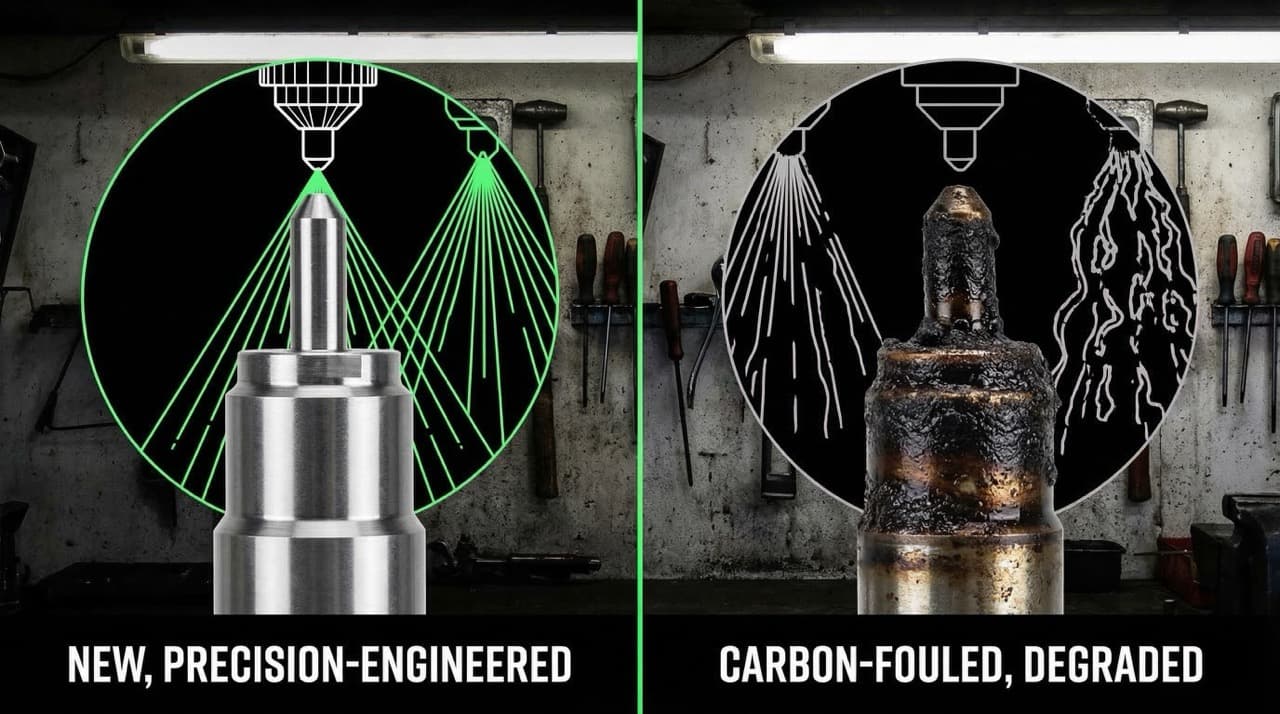
Modern heavy-duty diesel engines are thermodynamically efficient machines: they burn over 98% of the fuel they inject. But thermal efficiency — how much of that combustion energy is converted to motion versus lost as heat — depends heavily on combustion temperature consistency. If you want a deeper dive into the physics of this process, the science behind fuel enhancement technology reveals exactly why stabilising these temperatures is the key to recovering lost miles per gallon. As carbon builds up on injector tips, piston crowns, and combustion chamber walls, it insulates surfaces, disrupts fuel spray patterns, and causes combustion temperatures to fluctuate cycle-to-cycle. The engine still burns the fuel. It just produces less motion per litre doing it.
- Carbon accumulation on injector tips degrades spray atomisation, reducing combustion completeness at the margins
- Deposits on piston crowns act as thermal insulators, reducing heat transfer efficiency
- Combustion temperature instability increases fuel consumption without producing a proportional increase in power output
- The result is degraded MPG relative to the vehicle's factory baseline — not catastrophic failure, but a measurable, progressive efficiency loss
The BVRLA Fleet Industry data consistently shows that fleet operators underestimate how much of their consumption increase year-on-year is attributable to engine degradation versus fuel price movement. The two get conflated on the same invoice line. Separating them is the first step to fixing the right problem.
The thermal degradation cycle cannot be reversed by fuel contracts or route software. It can be addressed by installing a coolant-based combustion optimisation device across your fleet — a permanent fix with no ongoing maintenance and verified 7–15% fuel efficiency restoration on high-mileage diesel assets.
How Much Does DPF Downtime Actually Cost a UK Fleet Per Year?
DPF Downtime Cost Estimator
Quantify the hidden fuel and maintenance cost of forced DPF regeneration across your fleet
Est. Excess Fuel Cost per Vehicle / Month
Est. Annual Regen Fuel Cost — Whole Fleet
DPF Cleaning Frequency at Current Soot Load
Est. Annual DPF Maintenance Cost — Fleet
Estimates based on industry-average regen fuel consumption uplift (7.5%) and DPF service thresholds. Actual costs vary by vehicle specification and operator.
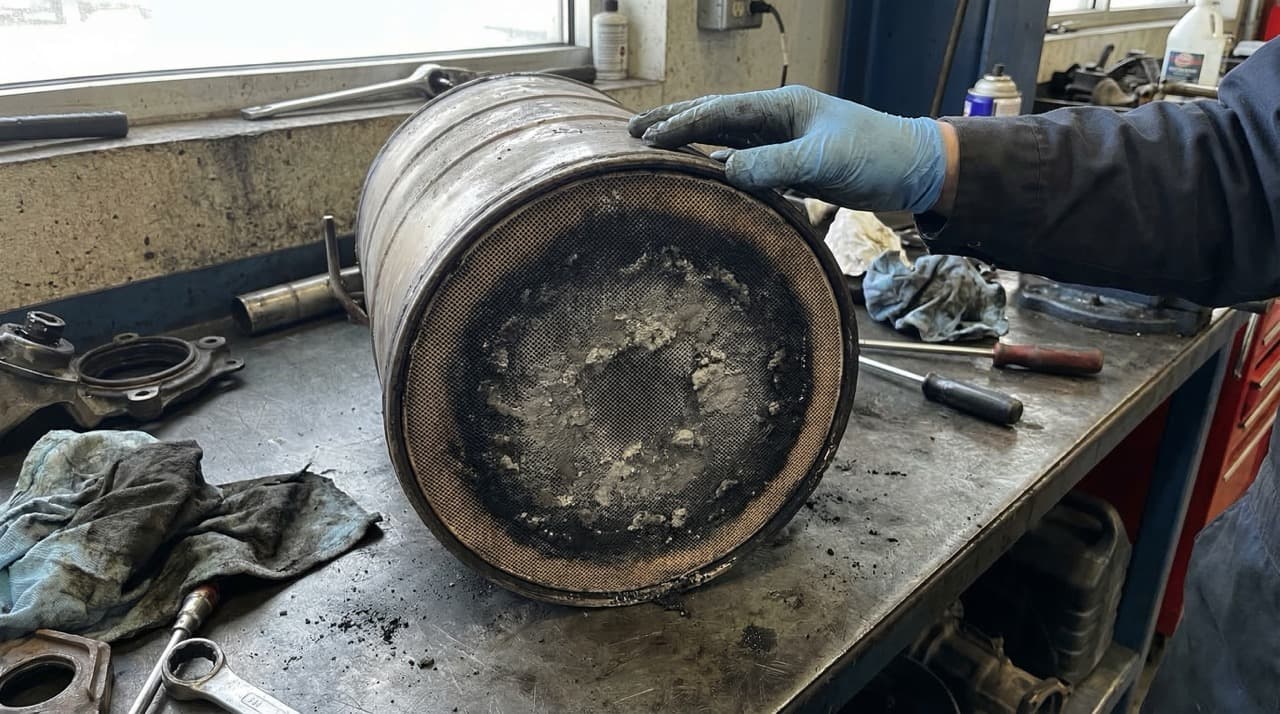
Reduce DPF Costs →Every time a vehicle is forced into active DPF regeneration, fuel consumption increases by 5–10% for the duration of that cycle. On a heavily carboned engine producing high soot output, active regeneration triggers more frequently and runs longer. Recognising the early symptoms of a clogged DPF before it forces extreme regeneration cycles can prevent these hidden fuel drains and save thousands in unexpected downtime. Stack this across a 20-vehicle fleet over 12 months and the hidden cost is material — before you add workshop time for DPF cleaning or replacement.
- Passive regeneration (motorway driving) is free. Forced active regeneration costs fuel at 5–10% above normal consumption per cycle
- A DPF replacement on an HGV runs £1,500–£4,000 in parts and labour, plus vehicle downtime
- Fleets operating in urban or regional distribution cycles — where passive regeneration rarely completes — face the highest regeneration frequency
- Reducing soot output through cleaner combustion directly extends active DPF service intervals and reduces forced regeneration frequency
Want the full picture on why these costs are compounding right now? The structural reasons behind rising UK fleet operating costs — fuel duty, supply chain pressure, driver costs — are covered in detail in Haulage Costs Are Rising. If you're building a business case for fleet efficiency investment, that context is essential framing for your finance director.
The hidden cost here is real. A single regional distribution HGV triggering forced DPF regen every 280 miles — well below the 500+ miles typical on motorway-dominant routes — can accumulate excess fuel consumption that exceeds the cost of two full DPF cleans annually. The fuel cost gets buried in the monthly fuel card report and the DPF events get logged separately in the workshop system. Nobody connects the dots.
What Fleet Fuel Efficiency Gains Are Realistic — and on Which Vehicles?
Fleet Efficiency Intervention Comparison
Four approaches — one cost-per-mile benchmark
| Intervention | Avg. Efficiency Gain | Gain Durability | Capital Cost | Payback Period | Best For |
|---|---|---|---|---|---|
| Driver TrainingEco-driving programmes | 3–7% | 6–12 months40–60% erodes as behaviour reverts | £500–£2,000/driver | 6–12 months | New driver onboarding |
| Tyre Pressure ManagementTPMS systems + protocols | 1–3% | Permanent if maintained | Low — operational cost | 1–3 months | All fleet types |
| Route OptimisationTelematics + dispatch software | Reduces total milesDoes not improve MPG on miles driven | OngoingSubscription dependent | £1,500–£5,000/year | 12–24 months | Distribution fleets with variable routing |
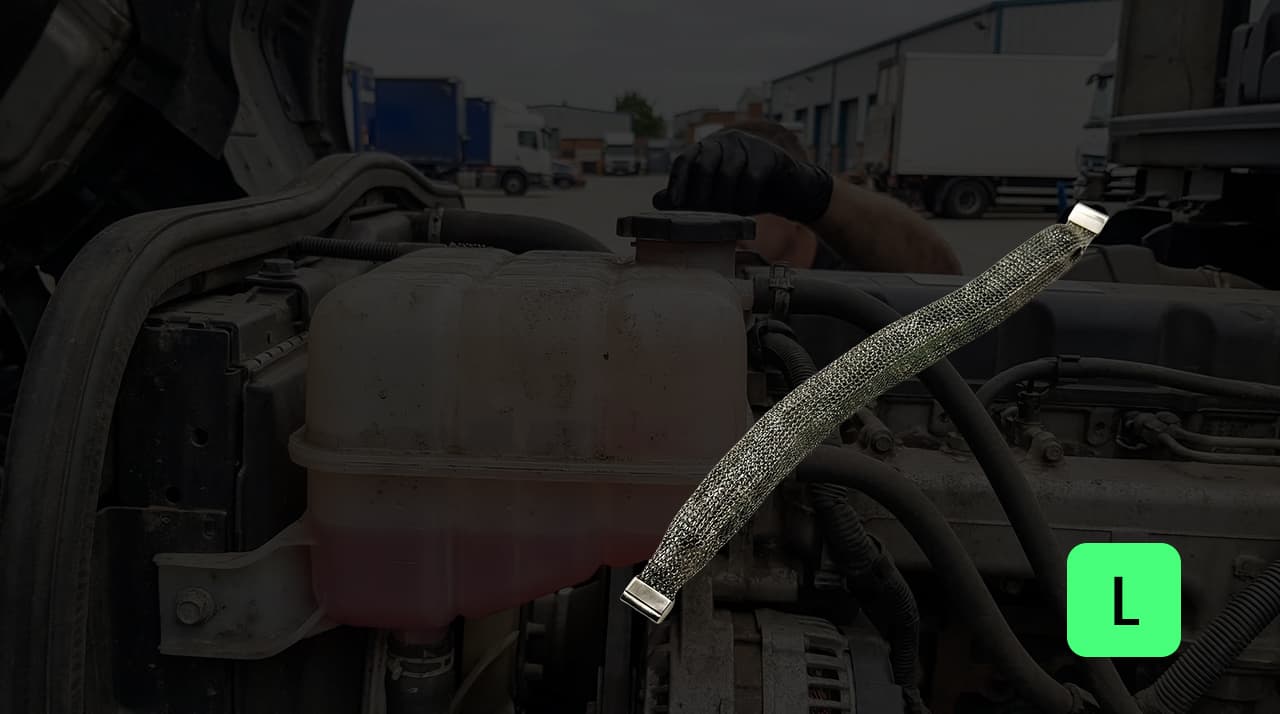
| Combustion Efficiency RestorationFuelMarble — coolant mineral device | 7–15%* | Permanent — no maintenance | £239–£519 per vehicle (one-time) | Weeks, not months | High-mileage vehicles with carbon accumulation (50,000+ miles) |
* 7–15% efficiency restoration applies to high-mileage vehicles with measurable carbon-related thermal efficiency loss. Results on newer, well-maintained Euro VI vehicles will be more modest. Source: FuelMarble verified real-world test results.
Conservative, credible efficiency restoration of 7–15% is achievable on fleet vehicles with measurable carbon accumulation — this is not a fleet-wide baseline claim, it is an engine-condition-specific recovery figure.
- Driver training delivers 3–7% average efficiency gains, with 40–60% of gains eroding within 6 months as driving behaviour reverts
- Tyre pressure management programmes deliver 1–3% consistently — genuine, but marginal
- Route optimisation reduces total miles driven but cannot improve miles-per-litre on the miles still covered
- Restoring combustion temperature stability on carboned engines addresses the largest single variable in per-vehicle consumption rate — and delivers gains that are mechanical rather than behavioural, meaning they don't revert
The procurement logic matters here. A fleet manager who can show a finance director a documented, vehicle-specific cost-per-mile improvement within 60–90 days has a fundamentally different internal conversation than one proposing a 5-year EV transition or a new telematics contract. The former has a payback period measured in weeks. The latter gets deferred to next year's budget cycle. The five highest-ROI interventions are ranked in 5 guaranteed ways to boost fleet fuel efficiency in 2026.
Can UK Fleets Reduce CO₂ Emissions Without Replacing Vehicles?
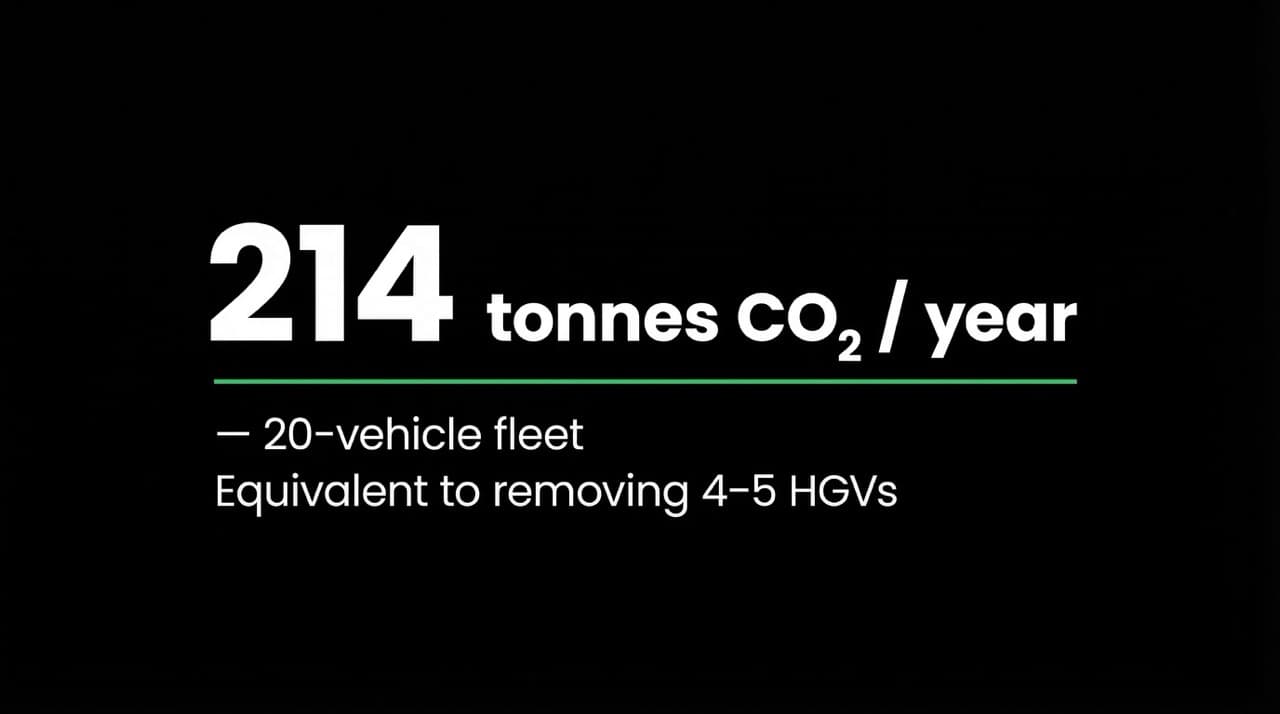
Yes. Improving combustion consistency on degraded engines reduces both fuel consumption and exhaust emissions simultaneously — without capital expenditure on new vehicles.
FuelMarble's verified Japanese government-standard emission tests show CO reduced by up to 93% and hydrocarbons and NOx reduced by up to 98% on vehicles where the technology is installed. Reviewing the complete breakdown of these verified emission reduction results provides fleet directors with the auditable data needed to prove environmental compliance without relying on vague fleet-average projections.
- For fleets under SECR (Streamlined Energy and Carbon Reporting) obligations, measurable CO₂ reduction creates auditable compliance headroom
- For fleets tendering for contracts with Scope 3 emission requirements from large retailers or logistics buyers, documented emission reductions are now a commercial differentiator
- Every 7–15% improvement in fuel consumption produces a proportional reduction in CO₂ per mile — the relationship is direct and auditable
SECR Fleet CO₂ Compliance Calculator
Estimate your fleet's annual CO₂ footprint, potential reduction with FuelMarble, and SECR reporting status
Annual Fleet CO₂ Footprint
Projected CO₂ Reduction with FuelMarble
Equivalent Vehicles Removed from Road
CO₂ calculated using DEFRA 2024 diesel emission factor (2.68 kg CO₂/litre). SECR threshold: 40,000 kWh annual energy consumption. Reduction modelled at 10% efficiency gain. Actual results vary.
View Verified Emission Data →How Do You Calculate Your Fleet's True Fuel Cost Savings Potential?
Use the interactive Fleet Fuel Cost Savings Calculator below to model your fleet's current spend, projected savings, FuelMarble payback period, and CO₂ reduction in real time. Adjust inputs to match your actual fleet. Results are modelled at the conservative end of FuelMarble's verified 7–15% efficiency restoration range, applied only to vehicles with 50,000+ miles where carbon accumulation is the primary efficiency variable.
Fleet Fuel Cost Savings Calculator
Enter your fleet details. Results update in real time.
Your Fleet Figures
Monthly Fleet Fuel Spend
Est. Monthly Savings with FuelMarble
Est. Annual Fleet Savings
FuelMarble Hardware Cost (Fleet, One-Time)
Estimated Payback Period
Est. CO₂ Reduction per Year
Savings modelled at 10% efficiency restoration — within FuelMarble's verified 7–15% range — on high-mileage vehicles with carbon accumulation. Hardware cost based on FuelMarble published pricing (S: £239, L: £519). Results vary by vehicle age, duty cycle, and maintenance history.
Get Fleet Pricing →Why the Fuel Bill Keeps Going Up Even When You Do Everything Right
Every method covered on this page works for what it targets. Driver training shapes behaviour. Route optimisation cuts unnecessary miles. Fuel cards shave margin off the purchase price. All of it moves the dial.
But none of it addresses what happens inside an ageing engine on every combustion cycle. As carbon deposits accumulate on injector tips and piston crowns, combustion temperature stability degrades. The engine still burns the fuel — modern diesels combust over 98% of what they inject. The problem is that more of that combustion energy exits as heat rather than motion. MPG drops. DPF regeneration triggers more frequently. Soot output increases. And every one of these effects compounds on itself month after month.
That's the mechanism FuelMarble targets. It's a Japanese-engineered mineral device — installed in the coolant reservoir in under 60 seconds, no mechanic required — that stabilises combustion temperatures across the engine cycle. More consistent combustion temperatures mean cleaner, more complete burns: less soot output, fewer forced DPF regeneration cycles, and measurable cost-per-mile recovery on vehicles where carbon accumulation has been the silent efficiency drain. Verified independent tests show CO reduction of up to 93% and hydrocarbon and NOx reduction of up to 98%. No refills. No servicing. Permanent.
For US and Canadian Fleet Operators
The cost analysis above uses UK units and operator context. Here is the equivalent savings breakdown for US fleet managers and owner-operators running Class 7 and Class 8 trucks.
US diesel context (2026): Average US diesel price is approximately $3.47/gallon (EIA forecast). Class 8 trucks average 4.5–6.5 MPG depending on route, load, and spec.
US ROI example — 10 Class 8 trucks:
- Annual mileage per truck: 120,000 miles
- Fuel consumption at 6.0 MPG average: 20,000 gallons/truck/year
- Fuel spend per truck at $3.47/gal: $69,400/year
- Fleet fuel spend (10 trucks): $694,000/year
- FuelMarble saving at 7% (conservative): $48,580/year
- FuelMarble L cost (10 units at $709 each): $7,090
- Payback period: 7.9 weeks
Warranty note for US buyers: FuelMarble installs into the coolant reservoir only — it does not modify the engine, fuel system, or any OEM component. Under the Magnuson-Moss Warranty Act, a manufacturer cannot void your warranty for using an aftermarket product that does not cause the defect. FuelMarble does not touch your fuel system.
US vehicle compatibility: FuelMarble L covers Class 4–8 trucks. FuelMarble S covers Class 1–3 pickup trucks and cargo vans. Both are compatible with Cummins, Duramax, and Powerstroke diesel engines.
Canadian operators: All figures above apply in Canada. Canadian diesel averages CAD $1.45–$1.65/litre depending on province (approximately USD $3.80–$4.30/US gallon equivalent). ROI timeline is similar to the US example above.
Related Articles
Avery leads FuelMarble's international operations and strategic direction. With a background spanning fleet economics, regulatory compliance, and macro fuel market trends, Avery oversees commercial partnerships, product positioning, and the company's growth across the UK, US, Canadian, and Mexican markets.
Ready to Improve Your Fuel Efficiency?
FuelMarble delivers up to 15% fuel efficiency improvement. Simple drop-in install.