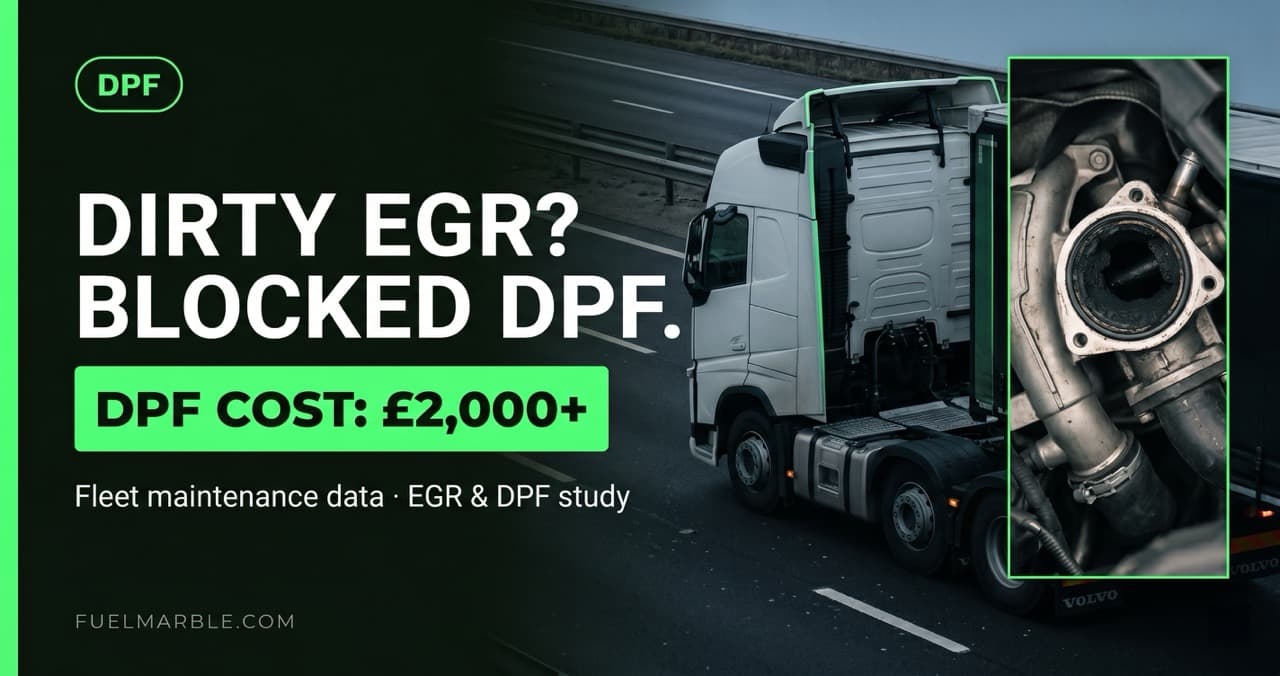
EGR Valve Cleaning Cost for HGV Fleets: UK 2026 Guide
EGR valve problems are one of the most expensive unplanned maintenance events in a heavy goods vehicle fleet, not because the cleaning or replacement itself is catastrophically priced, but because a neglected EGR valve triggers a cascade failure across the entire Euro VI emission system. If you run modern HGVs and want the full picture on emission system maintenance, start with our complete guide to heavy-duty truck maintenance and emission systems. This article focuses specifically on EGR valve cleaning costs, replacement costs, cleaning intervals, and the decision framework fleet operators use to avoid a five-figure repair bill from a problem that started at under £300.
The commercial reality: fleet operators who clean EGR valves reactively (after a fault code) typically face two to four times the total cost of operators who clean proactively at scheduled intervals.
What Does the EGR Valve Do in a Euro VI HGV?
The EGR valve reduces NOx emissions by recirculating a portion of exhaust gas into the intake manifold, lowering combustion temperature and oxygen concentration. In Euro VI trucks, the EGR operates alongside the SCR (AdBlue) system. Both are required to hit the 77% NOx reduction target. Neither system can fully compensate if the other fails, and a neglected EGR valve produces a cascade failure across DPF and SCR together.
The EGR valve's job in a Euro VI diesel HGV is to reduce nitrogen oxide (NOx) emissions by recirculating a controlled portion of exhaust gas back into the intake manifold, lowering combustion temperature and oxygen concentration in the cylinder. In Euro VI trucks, the EGR works in parallel with the SCR (AdBlue) system. Both are required to hit the 77% NOx reduction target that Euro VI demands over Euro V. Neither system can compensate fully if the other fails.
Key facts about EGR in heavy-duty diesel engines:
- Euro VI regulations mandate a 77% NOx reduction vs Euro V on the transient test cycle. EGR alone cannot achieve this, which is why SCR (AdBlue dosing) runs alongside it
- HGVs use high-pressure EGR, which routes high-soot exhaust gas before the DPF back to the inlet. This soot load is why HGV EGR valves coke up faster than car EGR valves
- The EGR cooler (a heat exchanger in the recirculation loop) cools the exhaust gas before it re-enters the engine. It is a separate component that also requires periodic cleaning
- When the EGR valve sticks or fails, combustion temperatures rise, NOx increases, and the SCR system must compensate by dosing more AdBlue, eventually triggering NOx fault codes and limp-home mode
- A contaminated EGR also disrupts the passive DPF regeneration process, because DPF regen depends on exhaust temperature profiles that EGR directly influences
This applies to any Euro VI HGV operating in the UK: Volvo FM, Scania R, DAF XF, MAN TGX, Mercedes Actros, Renault T, Iveco Stralis, all share this integrated emission architecture. It does NOT apply to pre-Euro VI trucks (Euro V and earlier) which use simpler EGR-only or SCR-only strategies without the same cascade risk.
Rule: EGR & SCR: Interdependent Systems
In Euro VI trucks, the EGR valve and SCR (AdBlue) system operate in parallel. Both are required to achieve the 77% NOx reduction target. A contaminated or stuck EGR forces the SCR to compensate by dosing more AdBlue; if the gap is too large, NOx fault codes trigger limp-home mode. Simultaneously, disrupted exhaust temperatures prevent passive DPF regeneration. One EGR fault destabilises three systems at once.
A West Midlands logistics operator running 12 Volvo FM 13-litre Euro VI trucks reported that a single truck entered limp-home mode after an EGR fault code during a timed delivery run. The EGR valve itself needed cleaning at an estimated cost of £350. The delay, missed SLA, and emergency workshop visit added an estimated £800–£1,200 in real-world fleet cost. None of which would have appeared in a scheduled maintenance budget.
How to Know When Your EGR Valve Needs Cleaning on an HGV
A failing EGR valve announces itself before it reaches complete failure, if fleet managers know the early signals. The most actionable indicator is increased AdBlue consumption on a truck whose dosing rate was previously stable, because a sticking EGR forces the SCR to compensate for higher NOx output. Acting before the fault code appears is the difference between a planned £300 clean and a reactive £1,500+ repair.
A failing EGR valve in an HGV announces itself clearly before it reaches complete failure, if fleet managers know what to look for. The most actionable early signal is increased AdBlue consumption on a truck whose dosing rate was previously stable, because a sticking EGR forces the SCR to compensate for higher NOx output.
Watch for these symptoms across your fleet:
- Engine management warning light. Illuminated EML is an automatic MOT failure; for commercial vehicles, it can trigger immediate DVSA prohibition
- Increased fuel consumption, a partially stuck EGR valve disrupts combustion efficiency; HGV fuel consumption rising 3–8% above fleet average without a driving reason warrants EGR inspection
- Rough idle or engine stall at standstill, classic EGR symptom on diesel HGVs, particularly noticeable in yard movements and at delivery bays
- Black or heavy exhaust smoke on deceleration, soot-heavy exhaust gas recirculating through a contaminated EGR deposits carbon in the intake, visible in exhaust output
- DPF failing to passively regenerate: EGR disruption throws off exhaust temperature profiles; if your DPF is requiring forced active regeneration more frequently, check the EGR before replacing the DPF
This applies when operating Euro VI HGVs on normal UK haulage routes. It does NOT apply to Euro V or earlier trucks, which have a different emission architecture and different fault patterns.
77%
NOx reduction required by Euro VI over Euro V on the transient test cycle. EGR and SCR together are both mandatory to reach this target
Source: DieselNet Euro VI Emission Standards: European Commission Regulation (EC) No 595/2009
A Yorkshire-based temperature-controlled fleet running DAF XF 480 Euro VI trucks began seeing two trucks requiring active DPF regeneration every 10 days rather than the expected 21-day passive cycle. Investigation confirmed both had partially seized EGR valves. A £280 ultrasonic cleaning per truck resolved the DPF frequency issue without any DPF replacement.
EGR Valve Cleaning Cost HGV UK: What to Budget in 2026
EGR valve cleaning for an HGV in the UK typically costs £250–£600 for the valve only, rising to £500–£1,100 if the EGR cooler is included. These figures represent specialist HGV workshop rates, significantly higher than car EGR cleaning quotes because HGV engine access requires more disassembly time and specialist tooling. Budget for both valve and cooler together: the marginal labour cost of cleaning the cooler while the valve is already removed is far lower than a return visit.
EGR valve cleaning for a heavy goods vehicle in the UK typically costs between £250 and £600 for the valve itself, rising to £450–£900 if the EGR cooler is included in the same service. These figures represent specialist HGV workshop rates, significantly higher than the £100–£180 quoted for car EGR cleaning, because HGV engine access requires more disassembly time and specialist tooling.
Cost breakdown for HGV EGR valve cleaning:
- EGR valve cleaning only (valve removed, ultrasonically cleaned, refitted): £250–£600
- EGR cooler cleaning (send-away ultrasonic service): approximately £180 for the clean itself, plus removal/refit labour
- Full EGR system service (valve + cooler + associated passages): £500–£1,100
- HGV specialist workshop hourly rate: approximately £75–£110 per hour
- Labour time (valve removal, clean, refit on HGV): estimated 3–6 hours depending on engine configuration and accessibility
Also factor in the cost of DPF cleaning if EGR has been neglected and accelerated DPF loading has resulted. Our article on DPF cleaning intervals for HGV fleets covers DPF-specific scheduling in detail. The two services are often bundled when both systems are overdue.
| Scenario | Typical Cost | Downtime | Outcome |
|---|---|---|---|
| Scheduled EGR valve clean (valve only) | £250–£600 | 4–6 hours | Full function restored |
| Scheduled EGR + cooler clean | £500–£1,100 | ½ day | Full function restored |
| EGR valve replacement: OEM-equivalent aftermarket | £800–£1,500 | 4–6 hours | Full function, new part |
| EGR valve replacement: OEM dealer parts | £1,200–£2,500 | ½–1 day | Full function, manufacturer warranty |
| Reactive repair after cascade failure (EGR + DPF/SCR) | £2,000–£5,000+ | 1–3 days | Variable: associated damage may remain |
A fleet operator in the East Midlands running 6 Scania R 450 Euro VI trucks had all six scheduled for EGR system servicing at 80,000-mile intervals as part of a proactive maintenance contract. The cost per truck was £420 including EGR valve and cooler cleaning. A single reactive replacement of an EGR valve assembly on a seventh Scania (same spec, same mileage, missed the scheduled service) cost £1,650, a £1,230 per-unit difference from skipping one service.
EGR Valve Replacement Cost for HGVs: When Cleaning Isn't Enough
Replacing an EGR valve on a heavy goods vehicle costs £800–£2,500 for parts and labour, depending on OEM versus aftermarket sourcing, engine accessibility, and whether the EGR cooler also requires replacement. The go/no-go decision is straightforward: if a diagnostic confirms the valve mechanism is intact and the fault is carbon contamination, clean it. If the actuator motor has failed electrically or the cooler is leaking, replace immediately, cleaning cannot restore mechanical or electrical failure.
Replacing an EGR valve on a heavy goods vehicle costs significantly more than car replacement figures suggest. For a Volvo FM, Scania R-series, or DAF XF with a Euro VI engine, expect to budget £800–£2,500 for parts and labour, with the wide range reflecting differences in OEM versus aftermarket parts, engine accessibility, and whether the EGR cooler also requires replacement.
When replacement is unavoidable:
- EGR valve actuator motor failure, electrical failure of the stepper motor that controls valve position; no cleaning can restore motor function
- Valve body cracking or warping, high thermal cycling on HGV engines can cause physical distortion; a warped valve body will not seal correctly even after cleaning
- EGR cooler internal leak, coolant entering the exhaust gas path; this dilutes engine oil, causes white smoke, and requires cooler replacement immediately
- Carbon accumulation beyond recoverable state, valves left to fail completely for high mileage (100,000+ miles without cleaning) often have carbon deposits that have hardened and fused the valve mechanism
Replacement parts sourcing options for UK fleet operators:
- OEM parts (Volvo, Scania, DAF dealer network): highest cost, full manufacturer warranty, exact fit
- OEM-equivalent aftermarket (VTP UK, Europa Truck Parts): typically 30–50% less than dealer pricing, same specification
- Remanufactured/exchange units: lowest upfront cost, returned core required; available for common fleet vehicles
This applies when diagnostic tools confirm the EGR valve cannot achieve its commanded position or diagnostic pressure tests show the cooler is leaking internally. It does NOT apply when the fault is purely carbon buildup causing sluggish valve response, in that case, cleaning nearly always restores full function at a fraction of replacement cost.
⚠️ EGR Cooler Leak: Do Not Delay Replacement
If diagnostics confirm the EGR cooler is leaking coolant into the exhaust gas path, this is an immediate replacement requirement, not a cleaning candidate. Coolant in the combustion circuit dilutes engine oil, causes white smoke, risks catastrophic engine damage if the vehicle continues operating, and will void most manufacturer warranties. Do not book a clean on a vehicle showing white exhaust smoke or a positive coolant-in-exhaust diagnostic.
A Norfolk haulage company running a Volvo FM 460 Euro VI at 340,000 km received a dealer quote of £2,100 for a new EGR valve assembly including cooler. The fleet manager sourced an OEM-equivalent EGR valve from an aftermarket specialist for £680 and had it fitted by an independent HGV workshop at 4 hours labour (£85/hour), bringing the total to £1,020. A pre-purchase diagnostic confirmed the cooler was not leaking and could be reused, avoiding the additional cooler cost.
How to Reduce EGR Carbon Buildup Across Your Fleet
Reducing the rate of EGR valve carbon buildup is the difference between cleaning at planned £300–£500 intervals and reacting to £1,500+ failures under time pressure. Carbon deposits in the EGR circuit are a byproduct of incomplete diesel combustion, soot that wasn't fully burned in the cylinder gets recirculated and sticks to valve surfaces, cooler fins, and intake passages. Addressing combustion quality upstream is the lever most fleet operators overlook.
Reducing the rate of EGR valve carbon buildup is the difference between cleaning at planned £300–£500 intervals and reacting to £1,500+ failures under time pressure. Carbon deposits in the EGR circuit are a byproduct of incomplete diesel combustion, soot that wasn't fully burned in the cylinder gets recirculated and sticks to valve surfaces, cooler fins, and intake passages.
Fleet strategies that demonstrably reduce EGR contamination rates:
- Enforce minimum motorway-cycle mileage per week, short-trip and urban-only duty cycles produce maximum soot; trucks that rarely reach full operating temperature never fully burn accumulated deposits, accelerating EGR loading
- Set mileage-based EGR inspection intervals, 30,000-mile cleaning intervals have been associated with a 60% reduction in emission system failures in fleet operations; city-duty trucks should be inspected more frequently
- Improve combustion quality at source, if the fuel-air mixture burns more completely, less raw soot enters the recirculation loop; this is where fuel treatment technology has a direct and measurable impact on EGR loading rate
- Avoid cheap diesel additives, some off-spec diesel additives increase injector fouling, degrading spray pattern quality and producing heavier soot loads directly upstream of the EGR intake
EGR Carbon Buildup Cycle: 6 Stages
- 1Incomplete combustion, Diesel burns incompletely, from worn injectors, urban stop-start cycles, or low-load idling, producing excess soot particulates in the cylinder.
- 2Soot enters exhaust, Raw soot load enters the high-pressure EGR recirculation circuit. In Euro VI HGVs, this circuit draws gas before the DPF, meaning the EGR sees the full soot burden.
- 3EGR recirculation, Soot-laden exhaust gas is cooled by the EGR cooler and redirected into the intake manifold. Cooler fins accumulate carbon deposits with each recirculation cycle.
- 4Valve deposits accumulate, Carbon coats the EGR valve plate, seat, and actuator linkage. Each cycle adds a thin layer, over 20,000–30,000 miles of mixed duty, this builds to valve-restricting thickness.
- 5Valve sticking or seizure, Deposits cause sluggish or zero valve response. The ECU detects a position error between commanded and actual valve angle and logs a fault code.
- 6Fault code + cascade failure, EML triggers limp-home mode. Combustion temperatures rise as EGR flow drops. SCR AdBlue dosing spikes. Passive DPF regeneration fails. Fleet cost escalates from a £300 problem into a £2,000+ repair.
A Cheshire-based pallet distribution company running 18 Mercedes Actros 1845 Euro VI trucks on urban and regional routes implemented a 25,000-mile EGR valve inspection programme after two trucks entered limp-home mode in the same month. Over the following 18 months, the fleet recorded zero unplanned EGR-related stoppages. The EGR cleaning cost across the fleet averaged £320 per truck per service. The two reactive repairs that prompted the policy change had cost £1,840 and £2,100 respectively, both involving EGR replacement rather than cleaning, because the valves had been allowed to seize completely.
Operators looking to reduce EGR loading at its source, by improving how completely diesel burns before exhaust gases enter the recirculation circuit. Can review the FuelMarble fleet programme at fuelmarble.com/fleet. Cleaner combustion produces less soot, less soot means slower EGR valve contamination, and slower contamination translates directly to longer intervals between cleaning services and lower total emission system maintenance cost across the fleet.
EGR valve maintenance in a Euro VI HGV fleet is not a discretionary cost. It is a compliance requirement, a reliability lever, and a direct line to reduced DPF and SCR repair spend. The cleaning vs replacement decision is straightforward when you have diagnostic data: clean when the mechanism is intact, replace when it is not, and do neither without a confirmed diagnosis first.
The operators who control this cost most effectively are not the ones who react fastest to fault codes. They are the ones who reduce the rate of EGR carbon buildup in the first place. That starts with combustion quality. Review what the FuelMarble fleet programme delivers for emission system longevity at fuelmarble.com/fleet.
Avery leads FuelMarble's international operations and strategic direction. With a background spanning fleet economics, regulatory compliance, and macro fuel market trends, Avery oversees commercial partnerships, product positioning, and the company's growth across the UK, US, Canadian, and Mexican markets.
Related Articles

Ready to Improve Your Fuel Efficiency?
FuelMarble delivers up to 15% fuel efficiency improvement. Simple drop-in install.